

Car Power Basics: How to Choose the Right Amplifier for Your Setup
You've probably heard it before: the amplifier is the heart of your car audio installation. And honestly? It's true. Your amp takes that weak signal from your head unit and turns it into serious power that drives your speakers and subs. But here's the thing: walking into the world of car amplifiers without a game plan can get overwhelming fast.
Whether you're building your first system or upgrading an existing setup, choosing the right amplifier comes down to understanding a few key fundamentals. We're talking power output, channels, impedance, and a handful of features that separate good amps from great ones. Let's break it all down so you can pick the perfect amp for your ride.
Understanding RMS Power: The Real Number That Matters
When you're shopping for amplifiers, you'll see all kinds of power ratings thrown around. Peak power, max power, and: most importantly: RMS power. Here's what you need to know: RMS (Root Mean Square) is the only number that matters. It represents the continuous power an amplifier can deliver without distortion.
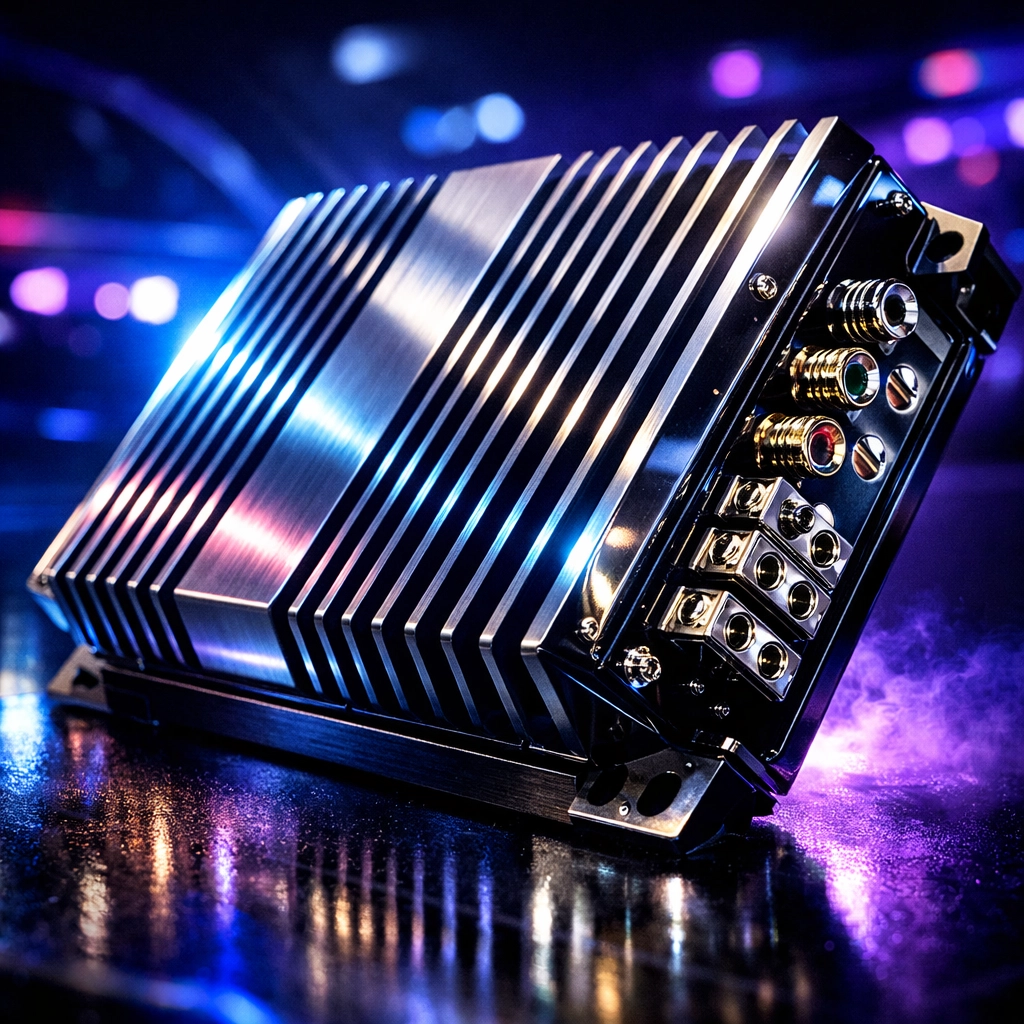
Matching your amplifier's RMS output to your speakers' RMS power rating is critical. The sweet spot? Your amp should provide between 75% to 150% of each speaker's RMS rating. Too little power means you'll be cranking your gain knobs to compensate, which introduces noise and distortion. Too much power risks blowing your speakers if you get reckless with the volume knob.
Your power needs depend on your vehicle size and how loud you actually want to go:
Small vehicles or factory speakers: 45-50 watts RMS per channel works great for daily driving and moderate volume levels.
Larger vehicles or higher volume: 75 watts RMS per channel gives you headroom for louder playback without distortion.
Maximum impact: 100+ watts RMS per channel is where you want to be if you're chasing competition-level sound or just love feeling the music.
For subwoofers, the requirements jump significantly. Factory stereo systems typically need 50-200 watts RMS, while aftermarket receivers work best with 200-300 watts RMS. If you're running amplified speakers, plan for 250-500 watts RMS dedicated to your subwoofer.
Premium brands like JL Audio build amplifiers with extremely efficient power delivery, which means you get clean, distortion-free output even at higher volumes. That's the difference between a mediocre system and one that genuinely performs.
Selecting the Right Number of Channels
Channels determine how many speakers your amplifier can power independently. Each channel is essentially a discrete power source, and choosing the right configuration makes or breaks your car audio installation.
Here's how different channel counts work:
1-channel (Mono): These are subwoofer specialists. Mono amps deliver massive power focused on low frequencies, making them perfect for driving one or more subs. If you're building a dedicated bass setup, this is your go-to.
2-channel: The versatile option. You can power a pair of speakers (left and right) or bridge the channels together to power a single subwoofer with combined output. Great for simple setups or component speaker upgrades.
4-channel: This is the workhorse configuration for most builds. Power four speakers (front and rear pairs), or use two channels for your front speakers and bridge the rear channels for a subwoofer. Maximum flexibility.
5-channel: The all-in-one solution. Four channels for your speakers plus a dedicated subwoofer channel in a single unit. If you're powering your entire system and want to save space, this is the move.
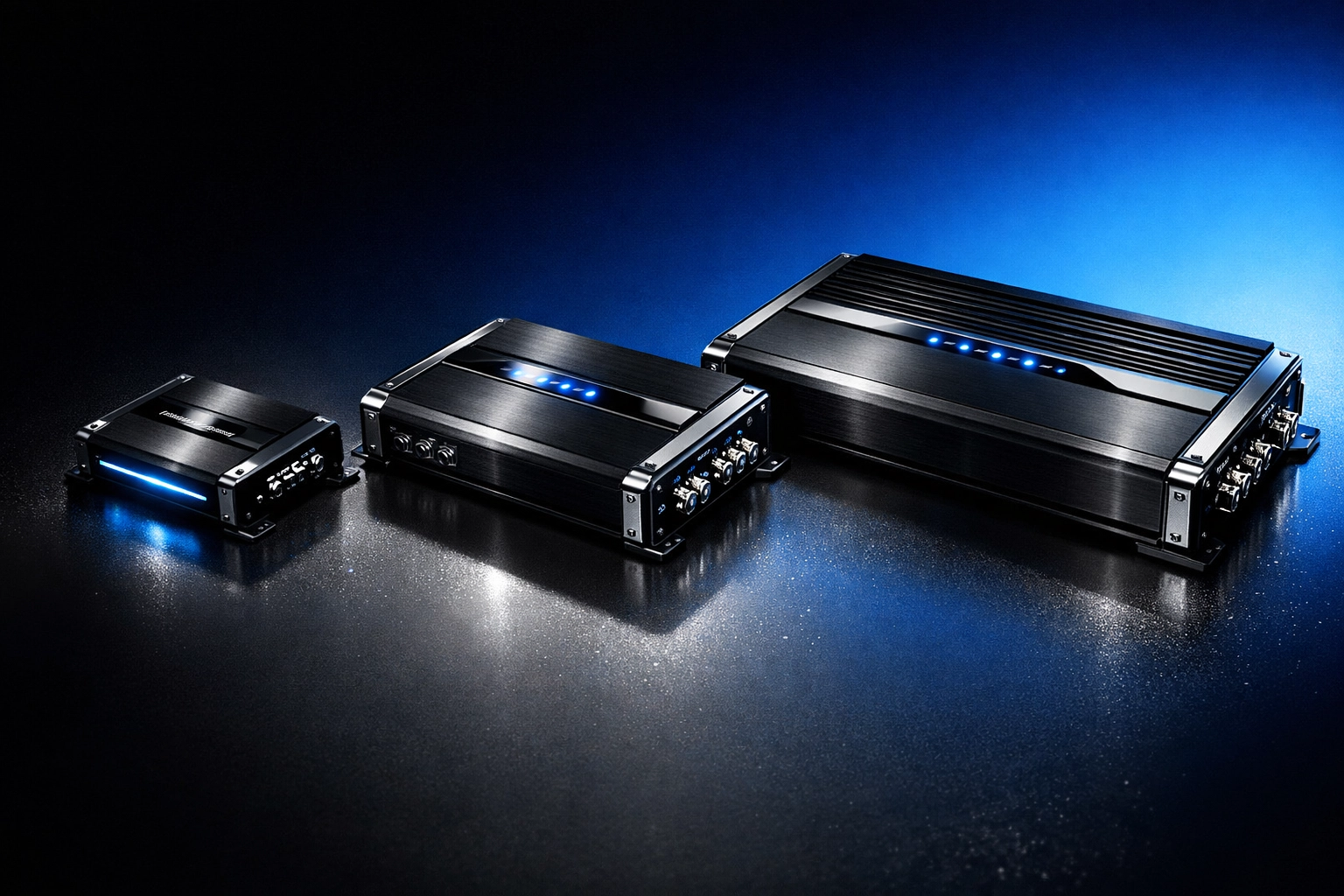
Starting with a 4-channel amplifier makes sense for most car audio installations. It gives you room to grow and adapt as your system evolves. Plus, quality 4-channel amps from brands like JL Audio deliver incredible sound staging when paired with component speakers up front.
Impedance Matching: Why Ohms Matter
Impedance is measured in ohms, and it represents the electrical resistance in your speakers. Your amplifier needs to match your speakers' impedance rating for optimal power transfer and sound quality.
Most car speakers run at either 2 ohms or 4 ohms. Your amplifier's specs will tell you what impedance loads it can handle and how much power it delivers at each rating. Here's the key: lower impedance means more power output, but not all amps can handle it.
For example, an amp rated at 75 watts RMS x 4 channels at 4 ohms might deliver 100 watts RMS x 4 at 2 ohms. That's a significant jump in power, but only if your amp is stable at 2 ohms. Running an amp below its rated impedance can cause overheating, distortion, or complete failure.
When you're planning your car audio installation, always verify:
- Your speakers' impedance rating
- Your amplifier's stable impedance range
- The power output at your target impedance
This ensures smooth power transfer, clean audio, and protection for your components. Premium amplifiers typically handle lower impedance loads more gracefully, which is another reason to invest in quality gear from the start.
Features That Separate Good Amps from Great Ones
Beyond the basics of power and channels, modern amplifiers pack features that can dramatically improve your system's performance and ease of installation.
Signal-to-Noise Ratio (SNR): Higher numbers mean cleaner sound with less background hiss. Look for SNRs above 100dB for premium performance. This becomes especially noticeable in quiet passages or when you're listening at lower volumes.
Crossover Controls: Built-in crossovers let you fine-tune which frequencies go to which speakers. High-pass filters send higher frequencies to your door speakers while blocking bass that causes distortion. Low-pass filters do the opposite for subwoofers, creating a cleaner overall sound.
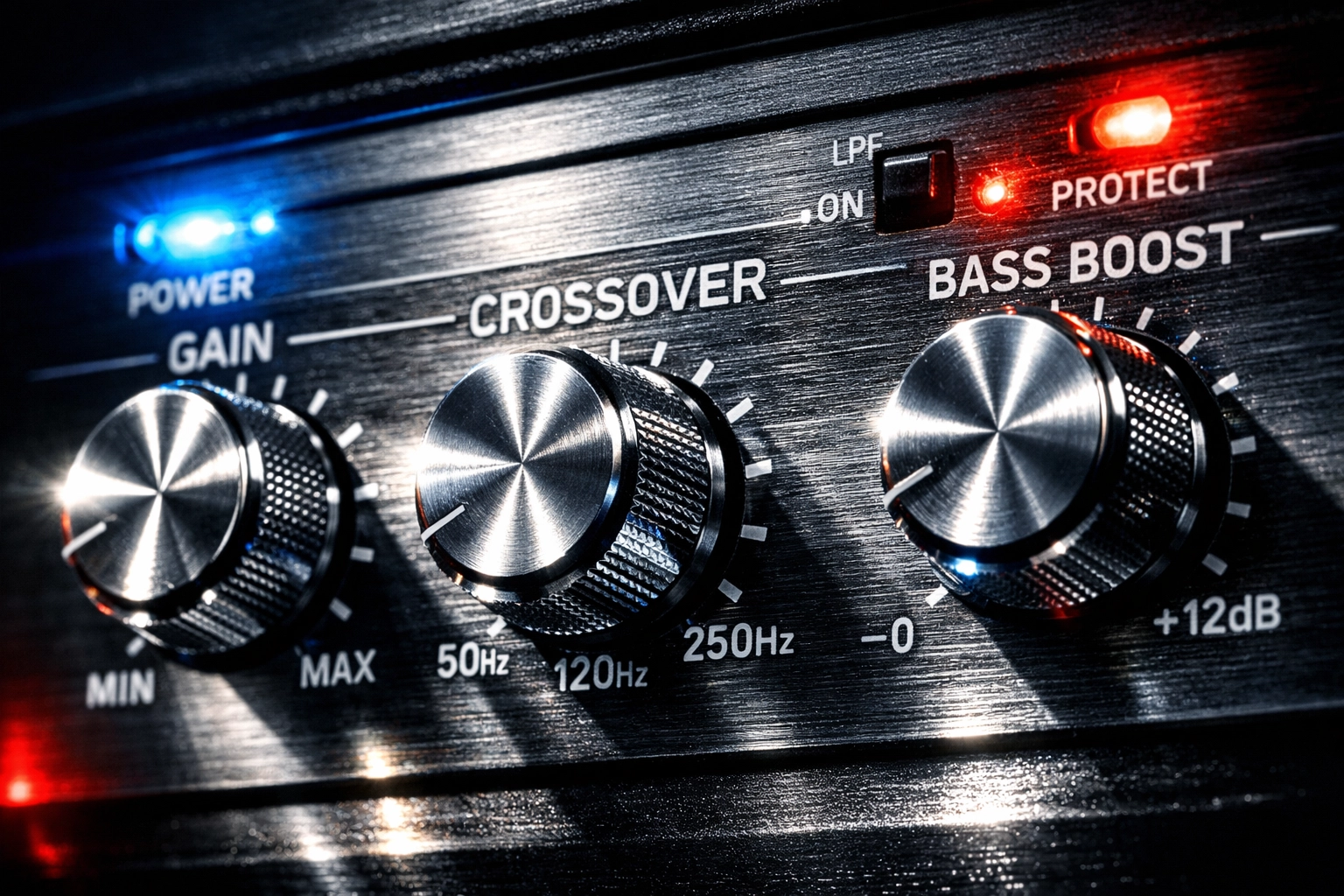
Bass Boost: Amplifies specific bass frequencies without maxing out your volume. Use this sparingly: a little goes a long way, and too much creates muddy, distorted bass.
Gain Control: This isn't a volume knob: it's an input sensitivity adjustment. Proper gain setting prevents distortion and matches your amp to your head unit's output. Get this wrong and you'll introduce noise or clip your signal.
Physical Size: Compact amplifiers save space under seats or in tight install locations. Full-size amps with larger heatsinks handle higher power levels and run cooler during extended use.
For most enthusiasts tackling a car audio installation, having adjustable crossovers and solid gain controls makes dialing in your system infinitely easier. This is where premium brands really shine: their amplifiers give you the tools to fine-tune every aspect of your sound.
Installation Tips and Considerations
Choosing the right amplifier is only half the battle. Proper installation ensures you actually get the performance you paid for.
Power and Ground Wiring: Use the correct gauge wire for your amplifier's power draw. Undersized wiring causes voltage drops, overheating, and poor performance. Most amplifiers include recommended wire gauge specs in their amplifier installation guide.
Mounting Location: Amplifiers need airflow to stay cool. Under seats, behind panels, or in trunk locations work well as long as air can circulate. Avoid covering vents or mounting directly on carpet.
Signal Cables: Run RCA cables away from power wires to prevent noise interference. Quality shielded cables make a noticeable difference in sound quality, especially on longer runs.
Fusing: Always use the proper fuse rating near your battery connection. This protects your vehicle's electrical system and prevents fires in case of a short circuit.
If you're new to car audio installation, don't stress: there are tons of resources available. And if you get stuck, reaching out to experienced installers or checking amplifier installation guide videos can save you hours of frustration.
Where to Find Your Perfect Amplifier
DIY Customs Store carries premium amplifiers from top brands like JL Audio, Hertz, and Wet Sounds: all shipped nationwide to customers in all 50 states. Whether you're in California, Texas, Florida, or anywhere across America, you'll get fast shipping and access to the same quality gear.
Plus, orders over $200 ship free, which means you can grab your amplifier and wiring kit in one go without worrying about extra costs. And if you're hunting for deals, check out the outlet clearance section for discounted premium gear: scratched boxes, dented units, or end-of-life models that still deliver full performance at serious savings.
Shopping online at diycustoms.store gives you access to detailed product specs, customer reviews, and expert advice to help you make the right choice. Whether you're building a complete system or upgrading a single component, you'll find what you need with nationwide shipping to your door.
Ready to Power Up Your System?
Choosing the right amplifier for your car audio installation doesn't have to be complicated. Match your RMS power to your speakers, select the right number of channels for your setup, verify impedance compatibility, and look for features that give you control over your sound.
Whether you're powering a pair of component speakers or a full system with multiple subwoofers, the right amplifier makes all the difference. Premium brands deliver clean power, reliable performance, and the features you need to dial in your perfect sound.
Browse amplifiers at DIY Customs Store and get your system upgrade started today. Free shipping on orders over $200 means you can build your complete car audio installation without breaking the bank. Serving automotive enthusiasts nationwide: ship to all 50 states and experience the difference quality gear makes.
SEO Keywords: car audio installation, amplifier installation guide, car amplifiers, RMS power, choosing car amplifier, car audio setup, speaker amplifier matching, amplifier channels, car audio power, JL Audio amplifiers
Meta Description: Learn how to choose the right car amplifier for your audio system. Complete guide covering RMS power, channels, impedance matching, and installation tips. Free shipping over $200.
Excerpt: Complete guide to choosing the right car amplifier. Learn about RMS power ratings, channel configurations, impedance matching, and essential features for your car audio installation.