
Compact Power: The Ultimate Guide to Off-Road Cube Lights
Off-road lighting upgrades don't require massive light bars mounted across your entire roof rack. Cube lights deliver focused illumination in compact packages that mount almost anywhere on your vehicle.
What Are Cube Lights?
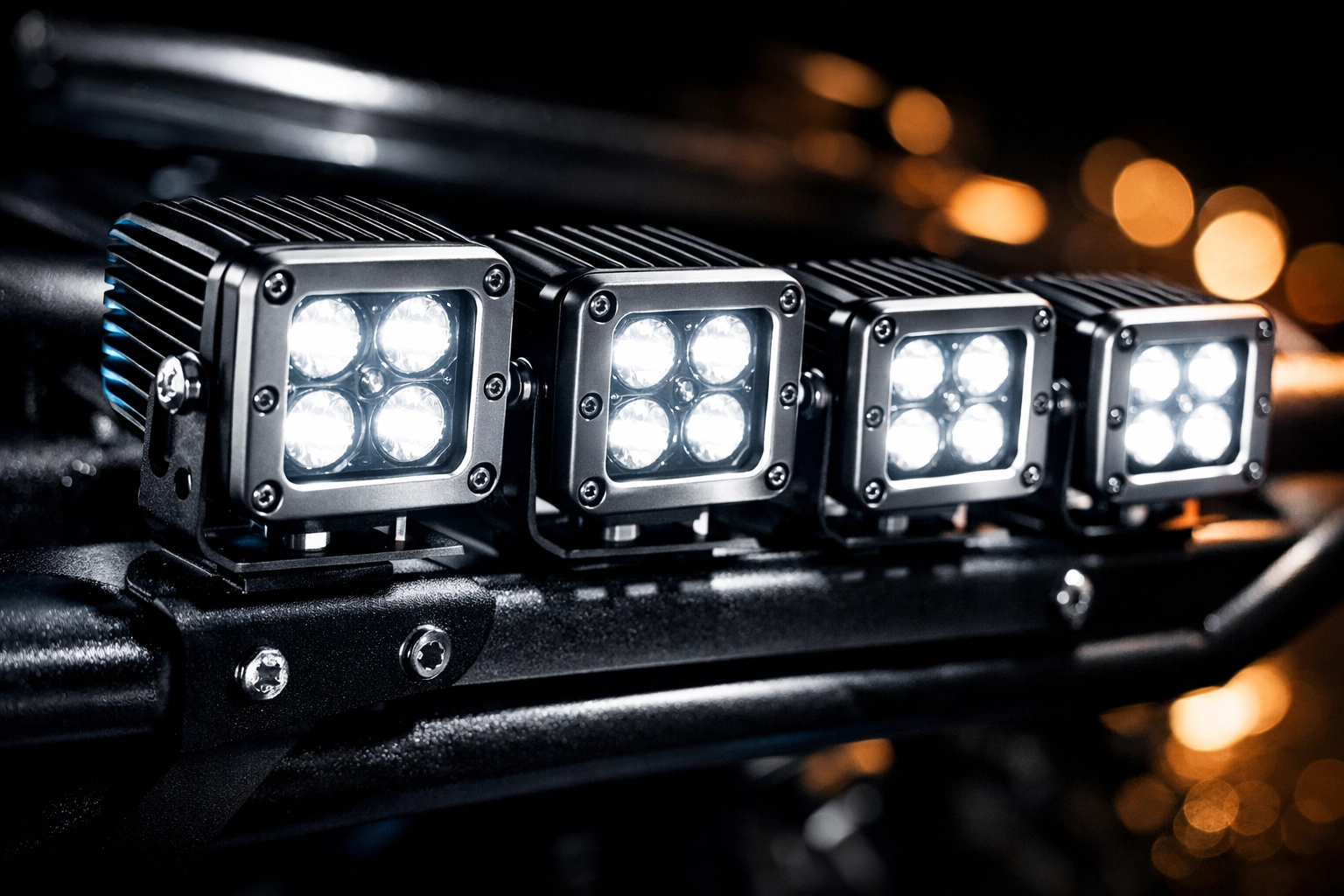
Cube lights are square or rectangular LED light pods, typically measuring 3 to 4 inches per side. These compact units produce significant output while taking up minimal mounting space. Their small footprint makes them ideal for bumpers, A-pillars, roof racks, and other locations where larger light bars won't fit.
The term "cube" refers to the housing shape rather than exact dimensions. Most measure between 2x2 inches and 4x4 inches, with varying depths depending on heat sink design and LED configuration.
Beam Pattern Options
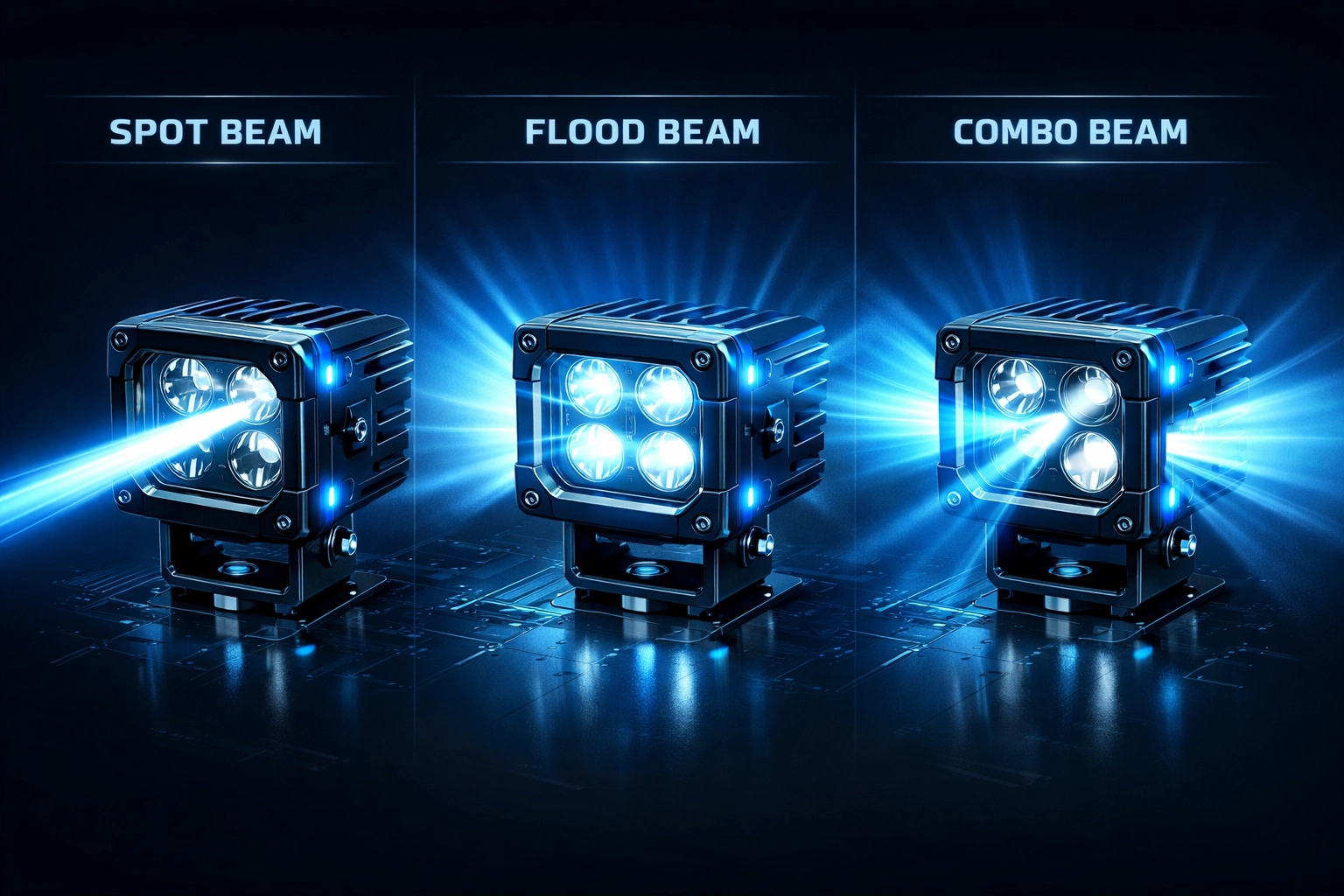
Cube lights come in three primary beam patterns:
Spot beams project narrow, focused light over long distances. These work best for high-speed trail running where you need to see far ahead. Spot patterns typically cover 10 to 15 degrees.
Flood beams spread light across wider areas at shorter distances. They illuminate the immediate area around your vehicle, making them ideal for low-speed technical terrain, camp setups, and reverse lighting. Flood patterns range from 40 to 60 degrees.
Combo beams combine spot and flood elements in a single housing. Half the LEDs focus on distance while the other half spread light wider. This configuration provides balanced illumination for varied terrain.
Understanding Lumens and Brightness
Raw lumens measure total light output. For off-road lighting, more lumens generally mean better visibility, but beam pattern affects how that light distributes.
A single quality cube light typically produces 1,500 to 4,000 lumens. Most off-road setups benefit from 6,000 to 12,000 total lumens across multiple lights. Four cube lights strategically placed often outperform a single light bar producing the same total output.
Effective lumens matter more than raw numbers. Quality optics and reflector design determine how much light actually reaches the trail versus getting lost to glare or scatter.
Rigid Industries: Industry Standards
Rigid Industries pioneered the LED cube light category for off-road applications. Their D-Series lights set benchmarks for output, durability, and thermal management.
Rigid uses proprietary LED technology and precision optics to maximize light projection. Their housings feature die-cast aluminum construction with integrated cooling fins. This design dissipates heat efficiently, extending LED lifespan even in extreme conditions.
The company offers multiple beam patterns within their cube light lineup. Their spot configuration pushes light over 1,000 feet downrange. Flood patterns illuminate 120 feet of trail width at close range. Combo units split the difference for all-around performance.
Rigid Industries products undergo extensive testing including vibration, water immersion, and thermal cycling. This quality control ensures reliability on demanding trails across all 50 states where DIY Customs Store ships nationwide.
Baja Designs: Performance Focused
Baja Designs builds off-road lighting for professional racing teams and serious enthusiasts. Their Squadron series cube lights deliver maximum output in compact housings.
These lights use high-flux LEDs paired with ClearView optics. The optical system focuses light precisely where needed without wasted scatter. Baja Designs emphasizes usable light over raw lumen numbers.
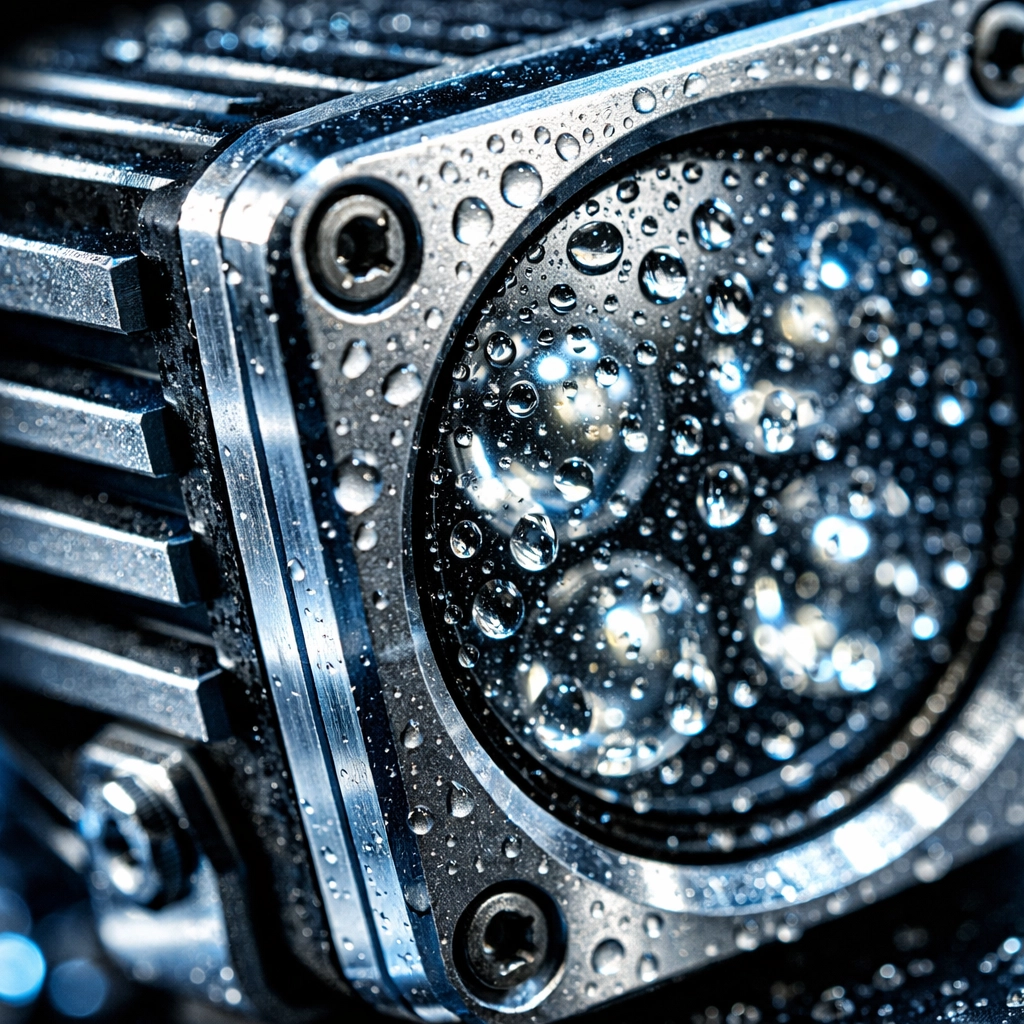
Squadron lights feature IP69K ratings, exceeding standard waterproof certifications. They withstand high-pressure water jets and complete submersion. The housings use Gore pressure relief vents to prevent moisture buildup while maintaining sealing integrity.
Baja Designs offers driving/combo, spot, wide cornering, and flood patterns. Their wide cornering configuration works particularly well for A-pillar mounting, illuminating trail edges and obstacles beside your vehicle.
Mounting Locations and Strategies
Cube lights mount anywhere you can secure a bracket. Common locations include:
Bumper mounts position lights low for close-range illumination. This placement works well for flood beams that light up immediate obstacles and trail texture.
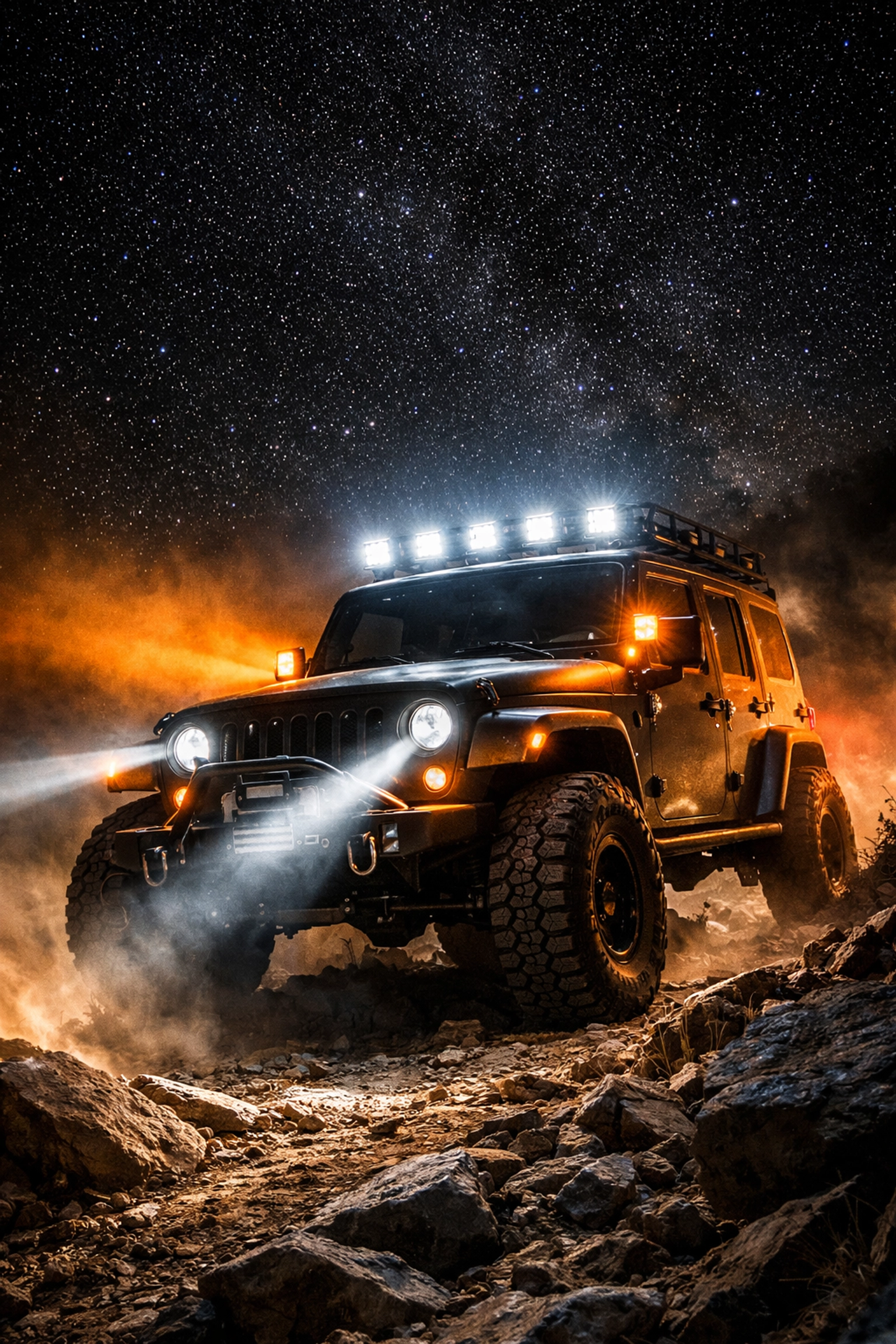
A-pillar brackets put lights at windshield height. This location provides excellent sight lines without requiring roof-top mounting. A-pillar cubes typically run combo or spot patterns.
Roof rack integration elevates lights above cab level. Mounting cubes at roof height expands your field of view and prevents light from bouncing off your hood. Use spot patterns here for maximum throw distance.
Rear-facing applications improve visibility when backing up or working around your vehicle at night. Flood-pattern cubes work best for reverse lighting.
Most cube lights use universal mounting feet with standard bolt patterns. Aftermarket brackets adapt these lights to specific vehicle mounting points. Vehicle-specific brackets eliminate modification and ensure clean installation.
Electrical Requirements
Cube lights draw between 20 and 50 watts each. Calculate total wattage for your complete setup to determine wire gauge and relay requirements.
Four 30-watt cube lights draw 120 watts total, or 10 amps at 12 volts. Use 14-gauge wire minimum for this load. Include a relay to prevent excessive current through your switch.
Quality wiring harnesses include inline fuses, relays, and weather-resistant connectors. These harnesses simplify installation and protect your electrical system. Most include switch-mounted options or integrate with existing auxiliary switches.
Wire routing matters. Secure all wiring away from heat sources, moving parts, and sharp edges. Use zip ties or wire loom for protection. Apply dielectric grease to connections for corrosion resistance.
Lens Options and Colors
Clear lenses provide maximum light output for general trail use. They produce white light matching LED color temperature, typically 5,000 to 6,000 Kelvin.
Amber lenses reduce glare in dust, fog, and snow. The longer wavelength penetrates atmospheric particles better than white light. Amber cubes work well for desert running or winter wheeling.
Selective yellow offers similar benefits to amber with less color shift. Some drivers prefer yellow for its balance between penetration and natural color rendering.
Cover options let you switch between colors without buying multiple light sets. Snap-on covers change lens color in seconds. This flexibility adapts your lighting to changing conditions.
Installation Basics
Mount cube lights to rigid surfaces that won't flex or vibrate excessively. Secure all mounting hardware with thread locker to prevent loosening from vibration.
Aim lights before final tightening. Point spot beams toward the horizon to maximize distance without blinding oncoming traffic. Angle flood beams slightly downward to illuminate the immediate trail area.
Test all connections before routing wires permanently. Verify proper operation of switches and ensure lights activate as intended. Check for any flickering or connection issues.
Apply heat shrink tubing or electrical tape to all wire splices. Waterproof connections with dielectric grease or liquid electrical tape. Poor connections cause voltage drop and premature failure.
Cube Lights vs Light Bars
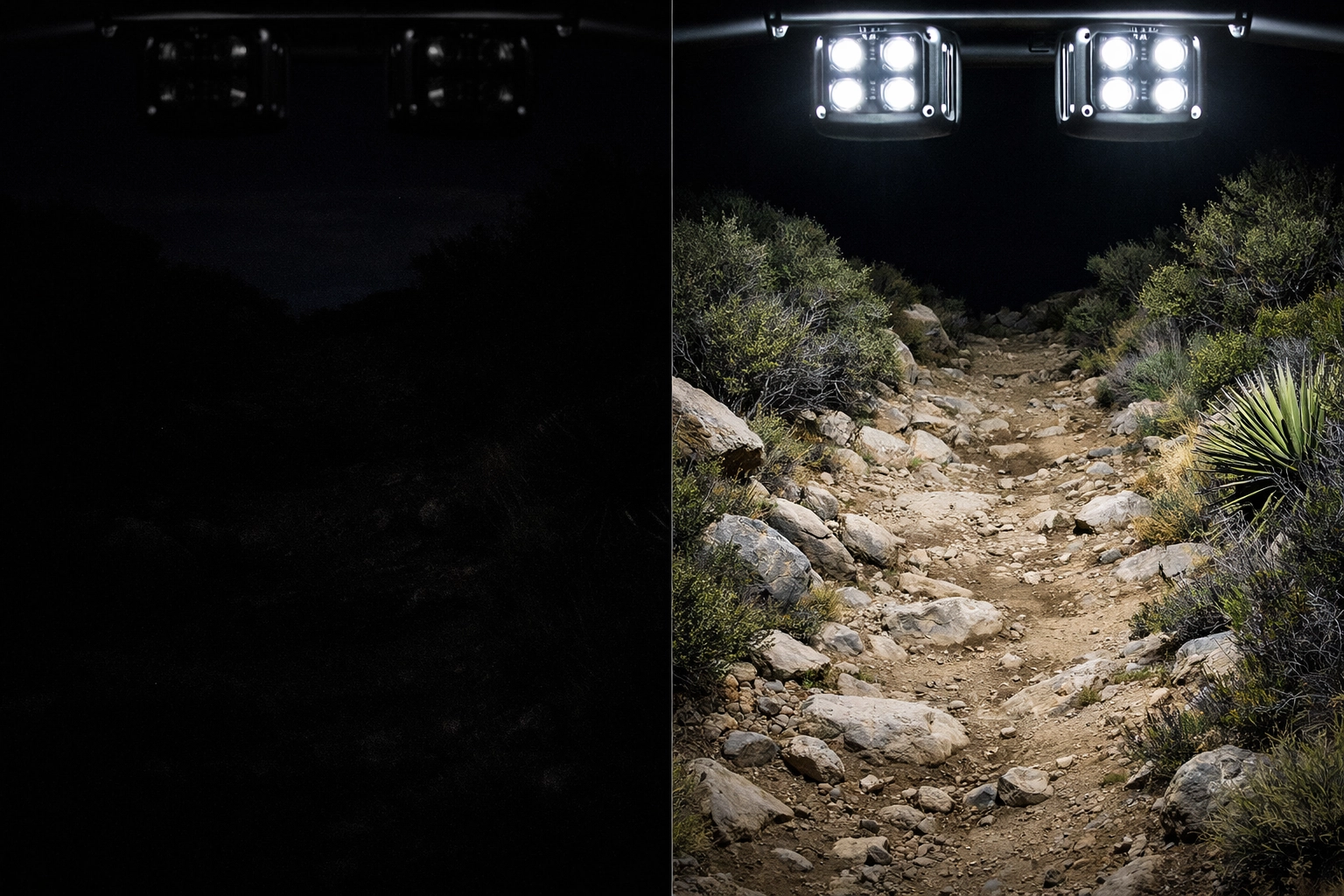
Cube lights offer advantages over full light bars in many situations. Their compact size allows multiple mounting locations that bars can't access. You can position individual cubes for specific purposes rather than compromising with a single bar placement.
Cubes cost less per unit than equivalent light bars. Starting with two or four cubes lets you build your lighting system gradually. Add more cubes as budget allows rather than saving for one expensive bar.
Modular setups provide redundancy. If one cube fails on the trail, you still have backup lighting. A failed light bar leaves you without auxiliary lighting entirely.
Light bars excel when you need continuous illumination across your entire sight line. They provide even light distribution without gaps between individual pods. Bars also present a cleaner appearance if aesthetics matter for your build.
Choosing the Right Configuration
Your driving style and terrain determine ideal cube light setup. Fast desert running benefits from multiple spot-pattern cubes for maximum distance visibility. Technical rock crawling needs flood patterns illuminating obstacles close to your vehicle.
Mixed terrain requires balanced approach. Run spot cubes at roof level for distance, combo units on A-pillars for mid-range coverage, and floods on the bumper for close work.
Consider your budget and installation complexity. Two high-quality cubes outperform four cheaper alternatives. Quality lights use better LEDs, superior thermal management, and more durable construction.
Get Your Off-Road Lighting Upgrade
DIY Customs Store ships Rigid Industries and Baja Designs cube lights to all 50 states. Orders over $200 qualify for free shipping nationwide. Browse available options at diycustoms.store or check the brands page for complete product lineups.
Headquarters in Pittsburgh offers local pickup for customers who prefer avoiding shipping wait times. Online ordering provides access to full inventory with fast nationwide delivery.
Quality off-road lighting transforms night driving capability. Cube lights deliver professional performance in compact packages that fit any vehicle and any budget.
SEO Keywords: off-road lighting, cube lights, LED pods, Rigid Industries, Baja Designs, off-road LED lights, compact off-road lighting, vehicle lighting upgrades, trail lighting, auxiliary lights
Meta Description: Complete guide to off-road cube lights. Learn about beam patterns, mounting options, and top brands like Rigid Industries and Baja Designs. Free shipping over $200.
Excerpt: Cube lights deliver powerful off-road illumination in compact packages. This guide covers everything from beam patterns to mounting strategies, featuring top brands like Rigid Industries and Baja Designs available with nationwide shipping.