

Deep Bass Secrets: Ported vs. Sealed Subwoofer Enclosures
Choosing the right subwoofer enclosure determines your bass performance. The box matters as much as the sub itself. Sealed and ported designs deliver completely different sound characteristics, output levels, and installation requirements.
Understanding Sealed Enclosures
Sealed boxes use acoustic suspension to control woofer movement. The enclosure creates an air spring behind the subwoofer cone, providing natural damping. This design produces tight, accurate bass response with minimal distortion.
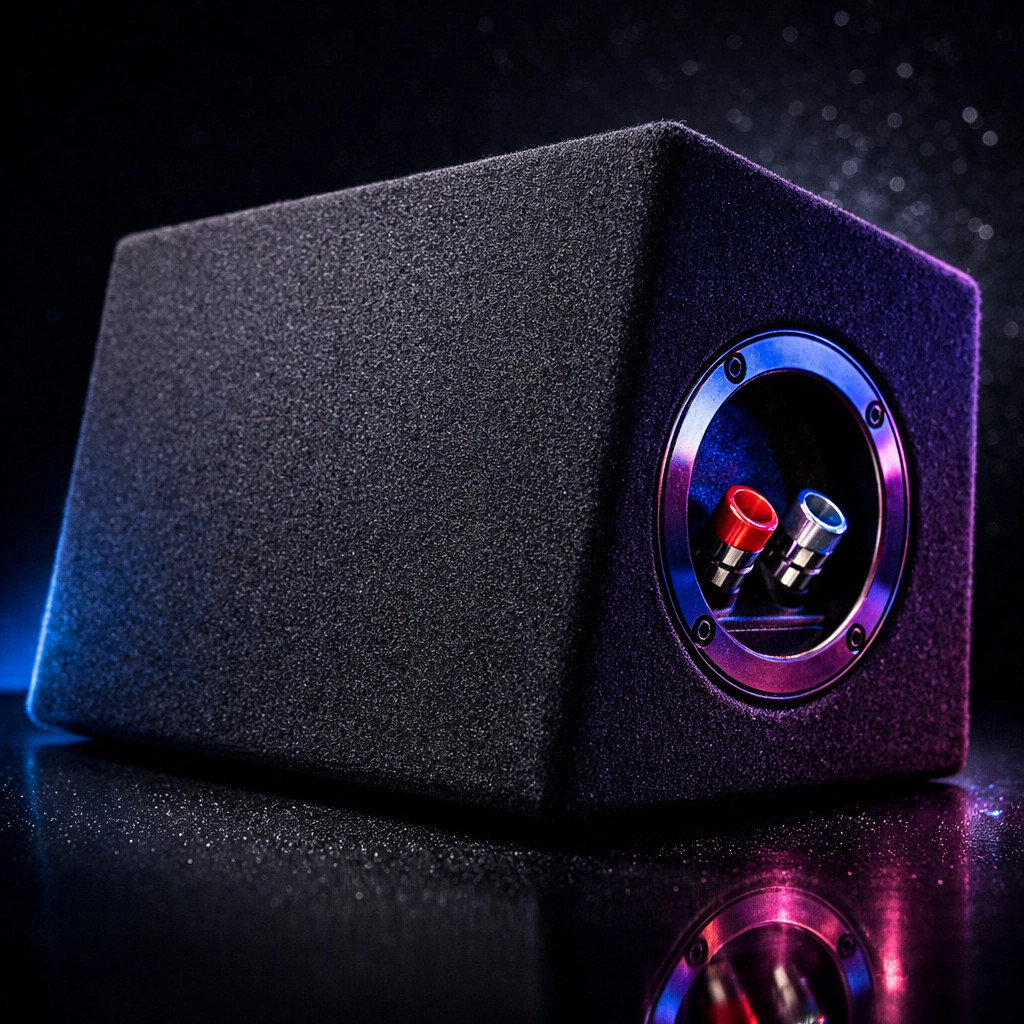
Sealed enclosures require less cabinet volume than ported designs. This compact form factor fits into vehicles where space is limited. Under-seat installations, small trunk areas, and tight marine applications benefit from sealed box efficiency.
The frequency response curve shows gradual roll-off characteristics. You can boost lower frequencies without sharp cutoff points. This allows flexible tuning with your amplifier's subsonic filter and EQ settings.
Sealed designs exhibit lower group delay and reduced phase rotation. Bass notes start and stop quickly, producing clean transient response. Kick drums, bass guitars, and other instruments sound precise without overhang or bloat.
The trade-off comes in dynamic output. Sealed subwoofers produce considerably lower SPL in deep bass frequencies compared to ported models. The cone requires four times the excursion to maintain equivalent output in each successively deeper octave. This demands more amplifier power and larger driver displacement to achieve reference-level performance.
How Ported Enclosures Work
Ported boxes add a tuned port or vent to the cabinet. This opening allows rear-wave energy from the subwoofer to exit the enclosure at specific frequencies. The port and cabinet volume create a Helmholtz resonator tuned to a target frequency range.
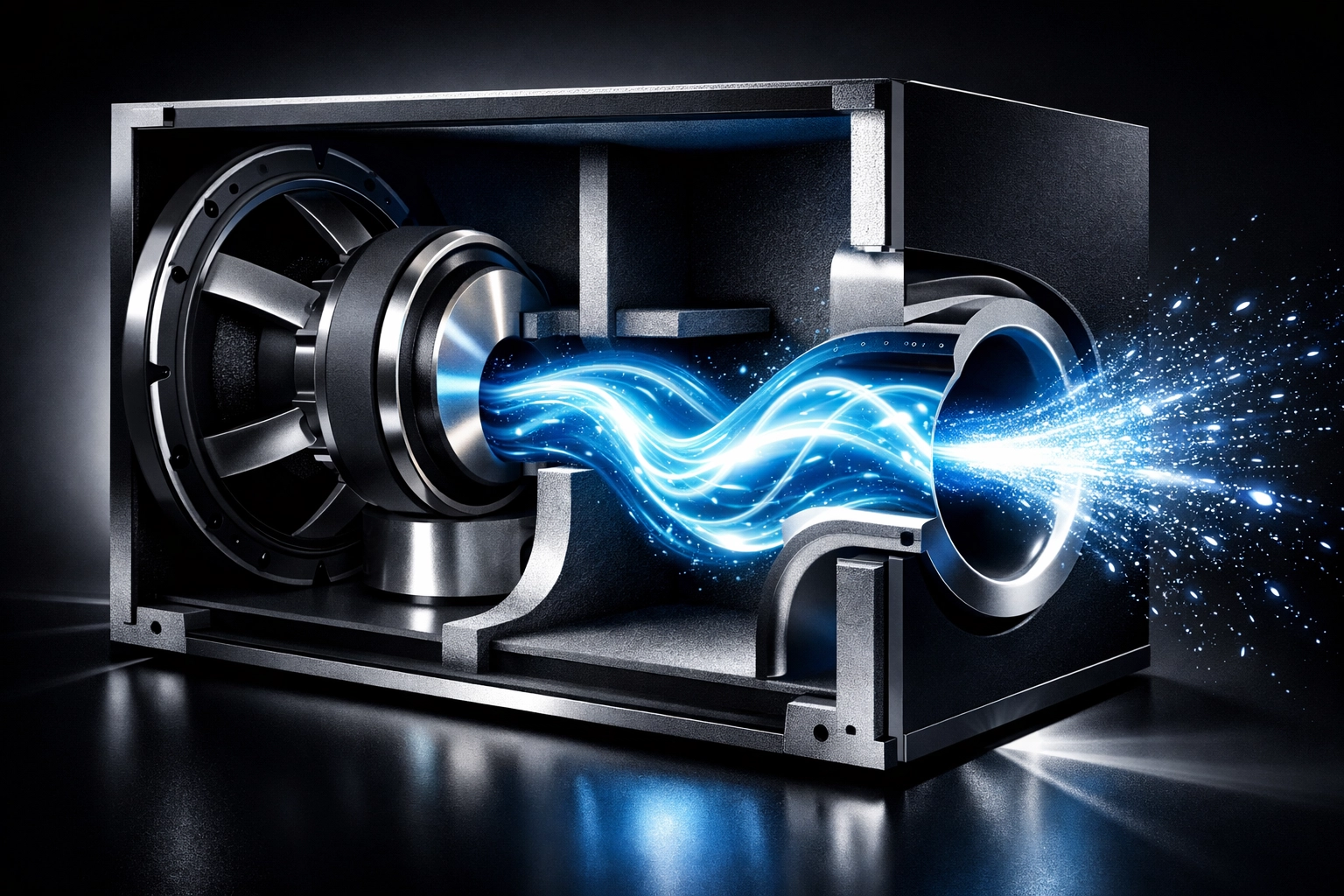
Ported designs produce 2-4X greater peak dynamic output in the 18-36 Hz octave versus sealed enclosures. The port extends low-frequency response and efficiency without requiring massive amplifier power. You achieve approximately 4-5 dB higher output levels in the tuning range.
The port tuning frequency determines bass characteristics. Lower tuning (around 28-32 Hz) emphasizes deep extension for home theater and electronic music. Higher tuning (35-40 Hz) provides punchy output for rock, hip-hop, and high-SPL applications.
Cabinet volume requirements increase significantly. Ported boxes need 1.5-2X the internal airspace of equivalent sealed designs. This makes installation more challenging in space-constrained vehicles.
The frequency response shows a peak at the tuning frequency, then sharp roll-off below that point. Output drops rapidly at the lowest frequencies. You lose subsonic output compared to sealed designs. Poor port design creates chuffing noise at high volume levels when air velocity exceeds safe limits.
Performance Comparison
Musical accuracy favors sealed enclosures. The controlled response renders instrumentals convincingly. Jazz, classical, acoustic music, and audiophile listening benefit from sealed box precision. Bass lines remain articulate across all volume levels.
Ported subwoofers excel in maximum dynamic impact. Action movies, EDM, hip-hop, and high-SPL demonstrations demand the output advantage ported designs provide. Larger vehicles and marine applications with open-air listening environments require the extra efficiency.
Room pressurization differs between designs. Sealed boxes work well in smaller cabins and cockpits where boundary reinforcement assists low-frequency response. Ported enclosures suit larger spaces requiring higher absolute output to achieve target SPL levels.
Power handling considerations vary. Sealed designs demand more amplifier wattage to match ported output levels. Budget 1.5-2X the amplifier power for sealed subwoofers compared to ported configurations targeting the same maximum SPL.
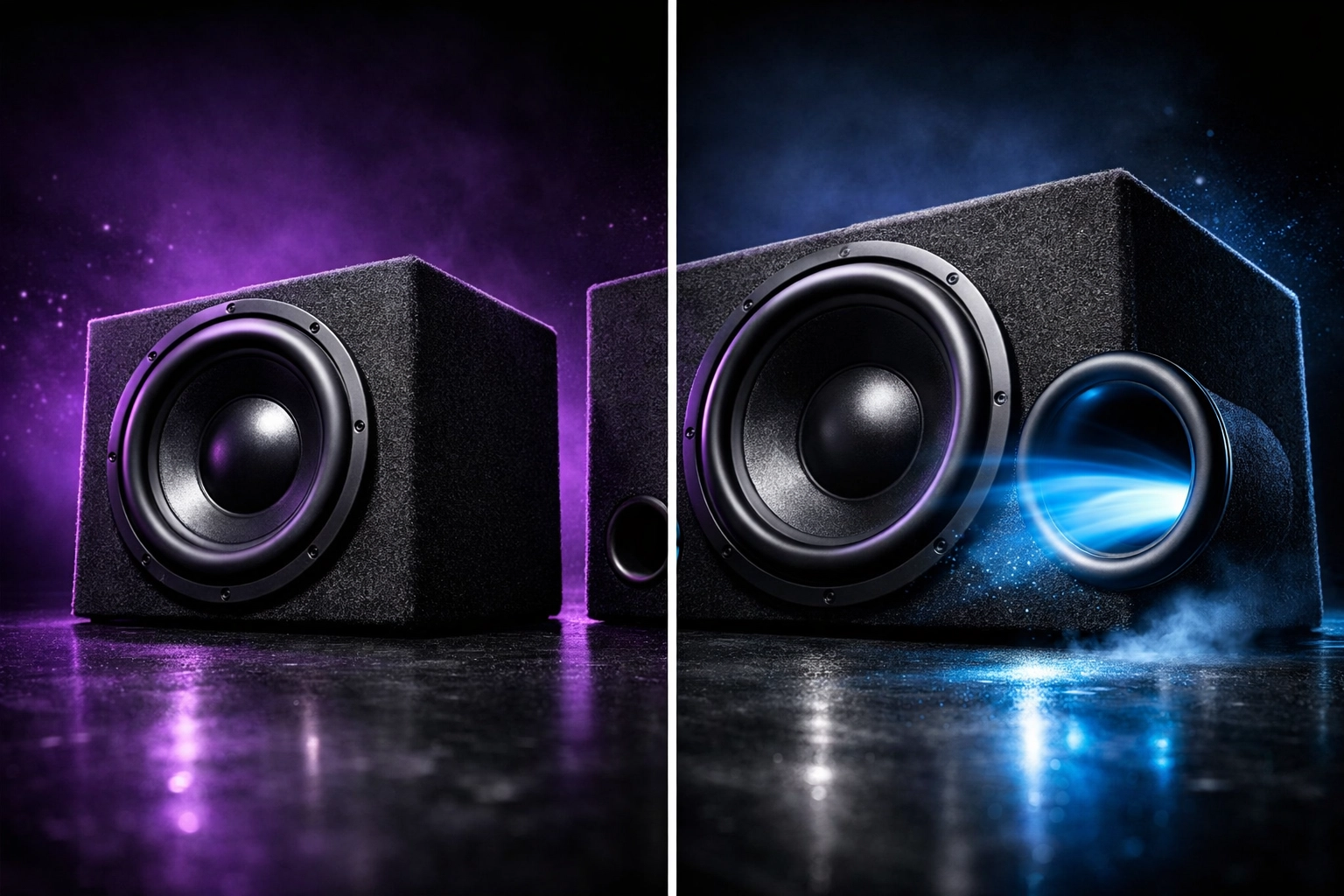
Transient speed separates the technologies. Sealed enclosures start and stop faster, producing tighter bass that sounds less bloated. Ported designs can sound looser or slower during complex musical passages, though quality implementations minimize this characteristic.
Premium Custom Solutions
JL Audio Stealthbox enclosures eliminate compromise between performance and installation. These vehicle-specific sealed designs optimize every parameter for your exact application. Computer modeling and extensive testing create enclosures that maximize output within available space.
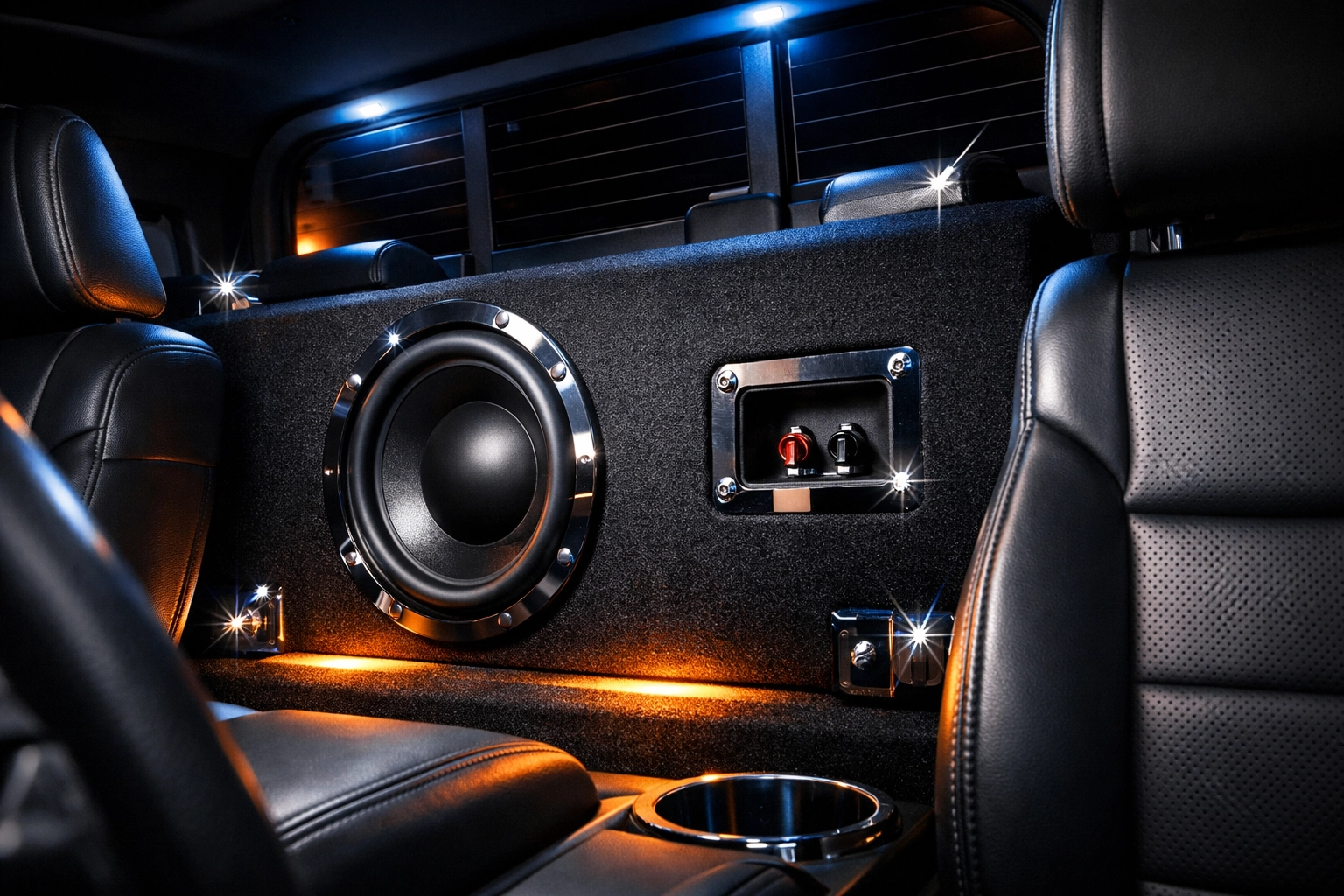
Stealthbox designs integrate seamlessly into factory locations. Under-seat installations, behind-seat panels, and cargo area configurations maintain storage space while delivering serious bass performance. Marine applications fit into consoles, hull spaces, and cockpit locations without sacrificing seating or storage.
The sealed design philosophy emphasizes accuracy and reliability. JL Audio subwoofers in matched enclosures produce clean, powerful bass across all musical genres. No tuning or adjustment required: just connect amplifier power and enjoy.
Custom fiberglass enclosures offer maximum flexibility. Professional fabricators create ported or sealed designs matching exact space requirements and performance goals. These installations utilize every available cubic inch while maintaining vehicle aesthetics.
Prefabricated truck boxes provide application-specific solutions. Extended cab, crew cab, and under-seat designs fit popular truck models. Both sealed and ported options accommodate single or multiple subwoofers. Check our selection for nationwide shipping to all 50 states.
Choosing Your Enclosure Type
Installation space drives the first decision. Measure available volume carefully. Sealed boxes fit tighter spaces. Ported designs need more room but deliver higher output from that larger footprint.
Musical preferences matter significantly. Accurate, tight bass for varied music styles suggests sealed enclosures. Maximum impact and deep extension for specific genres or movies points toward ported designs.
Amplifier power availability affects the choice. Limited amplifier wattage benefits from ported efficiency. High-power amplifiers paired with quality drivers perform excellently in sealed applications.
Vehicle acoustic environment influences performance. Smaller cabins with strong boundary reinforcement work well with sealed boxes. Larger vehicles, convertibles, and open marine installations require ported output advantages.
Budget considerations extend beyond the enclosure. Ported boxes need larger amplifiers to maximize their efficiency advantage. Sealed designs demand more amplifier power but use smaller, less expensive cabinets.
Building or Buying Enclosures
DIY construction allows precise tuning for your specific requirements. Ported boxes require accurate port length and diameter calculations. Online calculators help determine optimal dimensions based on driver parameters and desired tuning frequency.
Sealed enclosures prove more forgiving during construction. Target the manufacturer's recommended volume within 10-15% tolerance. Use quality MDF at minimum 3/4-inch thickness. Seal all joints completely to prevent air leaks that reduce performance.
Prefabricated enclosures save time and ensure proper construction. Verify the internal volume matches your subwoofer's specifications. Ported boxes must match tuning frequency to your performance goals. Sealed designs need volume within the recommended range.
Vehicle-specific solutions from premium manufacturers eliminate guesswork. JL Audio, Wet Sounds marine enclosures, and application-matched designs guarantee performance. These products ship nationwide from our Pittsburgh headquarters with free shipping on orders over $200.
The outlet clearance section offers premium subwoofer enclosures and complete systems at significant discounts. Cosmetic blemishes, returned items, and end-of-life products from JL Audio, Wet Sounds, and other top brands deliver full performance at reduced prices. Perfect for budget builds requiring premium components.
Installation Considerations
Enclosure placement affects bass response significantly. Corners and boundaries reinforce low frequencies. Sealed boxes benefit more from boundary loading than ported designs. Experiment with position before permanent mounting.
Secure mounting prevents enclosure movement and rattles. Heavy subwoofer systems create substantial forces during operation. Use appropriate fasteners and bracing. Marine installations require corrosion-resistant hardware and sealed connections.
Wiring access and amplifier location influence enclosure orientation. Plan wire routing before final installation. Maintain adequate ventilation around ported enclosures. Port openings need clear space to prevent obstruction that causes chuffing.
Trunk and cargo area installations should preserve vehicle functionality. Removable enclosures or hinged designs maintain access to spare tires and storage areas. Consider daily usage patterns when planning permanent installations.
Final Decision
Your listening preferences and installation environment determine the optimal choice. Sealed enclosures deliver accurate, musical bass in compact packages. Ported designs maximize output and efficiency in larger spaces.
Both technologies perform excellently when implemented correctly. Quality subwoofers, proper amplifier power, and correct enclosure design create impressive bass systems regardless of box type.
DIY Customs Store serves automotive and marine audio enthusiasts nationwide. Browse custom subwoofer enclosures, premium drivers, and complete systems at diycustoms.store. Expert advice, competitive pricing, and fast shipping to all 50 states. Free shipping on orders over $200. Order online or contact our team for installation guidance.
SEO Keywords: custom subwoofer enclosures, ported vs sealed subwoofer box, car audio bass, subwoofer enclosure design, JL Audio Stealthbox, vehicle-specific subwoofer boxes
Meta Description: Learn the differences between ported and sealed subwoofer enclosures. Discover which design delivers the bass performance you need for your vehicle or marine audio system.
Excerpt: Sealed vs ported subwoofer enclosures produce completely different bass characteristics. Sealed boxes deliver tight, accurate response in compact spaces. Ported designs maximize output and efficiency. Choose the right design for your installation.