
HID vs. LED Lighting: Picking the Best Vision for Your Vehicle
Choosing between HID and LED lighting affects visibility, cost, and performance. Both technologies outperform standard halogen bulbs. The right choice depends on your vehicle, budget, and driving conditions.
Light Output and Beam Pattern
LEDs produce approximately 10,000 lumens compared to HIDs at 8,000 lumens. This gives LED lights about 25% more total light output. However, lumens alone don't determine visibility.
HIDs create a more focused, dense beam pattern. They illuminate roughly one-third more area than LEDs, particularly on road sides. This wider coverage benefits highway driving and spotting hazards in peripheral vision.
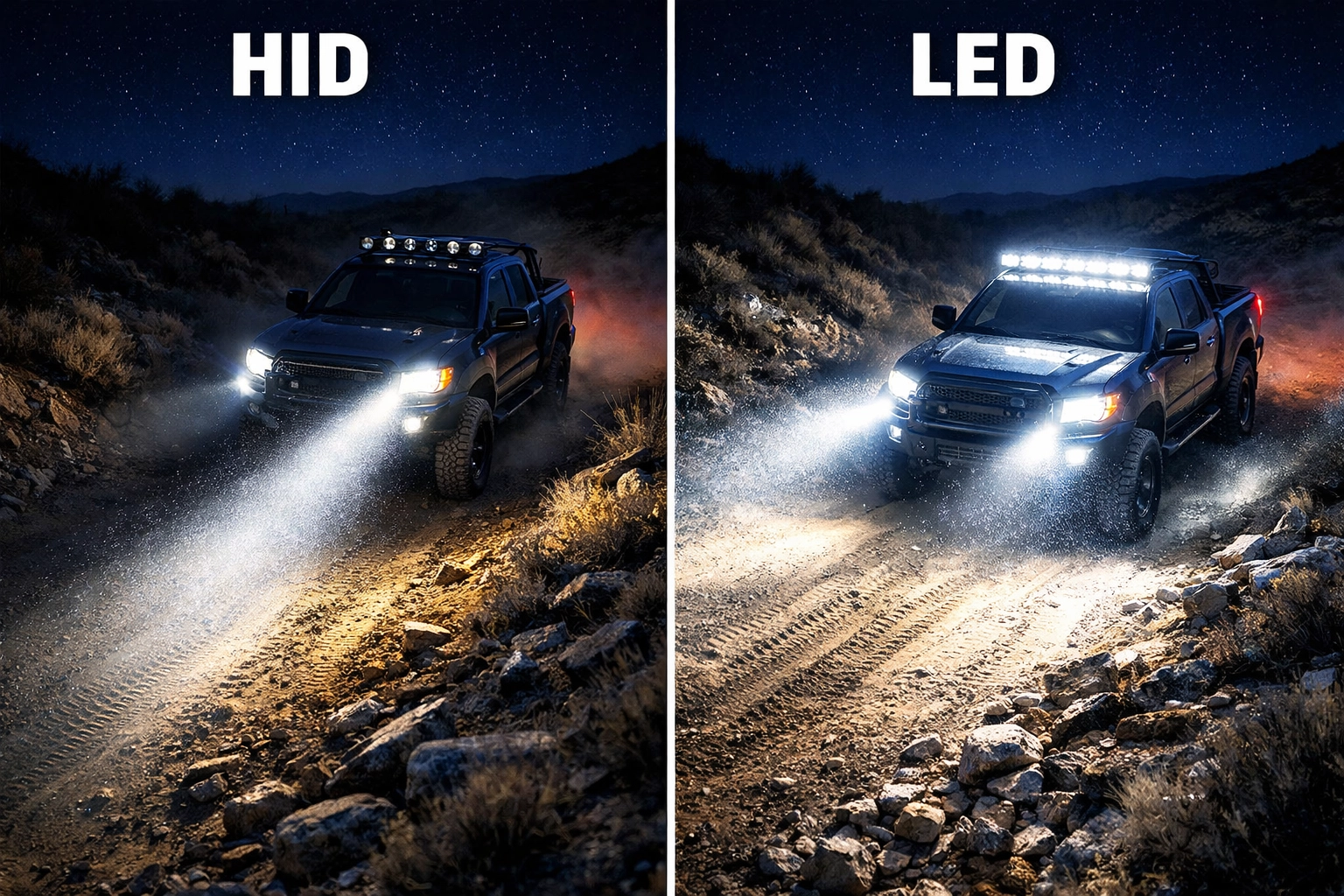
LEDs provide more consistent light distribution across the entire beam. The immediate full-brightness output means no delay when turning on your lights. HIDs require 2-5 seconds to reach maximum brightness after activation.
For off-road lighting applications, both Rigid Industries and Baja Designs offer LED configurations optimized for trail use. Their spot and flood beam patterns provide targeted illumination for specific terrain types.
Durability and Lifespan
LED lights last significantly longer than HID systems. Quality LED units operate for 45,000 hours or more. Some premium models exceed 100,000 hours. HIDs typically last around 15,000 hours before requiring replacement.
LEDs maintain consistent brightness throughout their lifespan. The light output remains stable until the unit fails. HIDs gradually fade as xenon gas depletes inside the bulb. This means diminishing visibility over time.
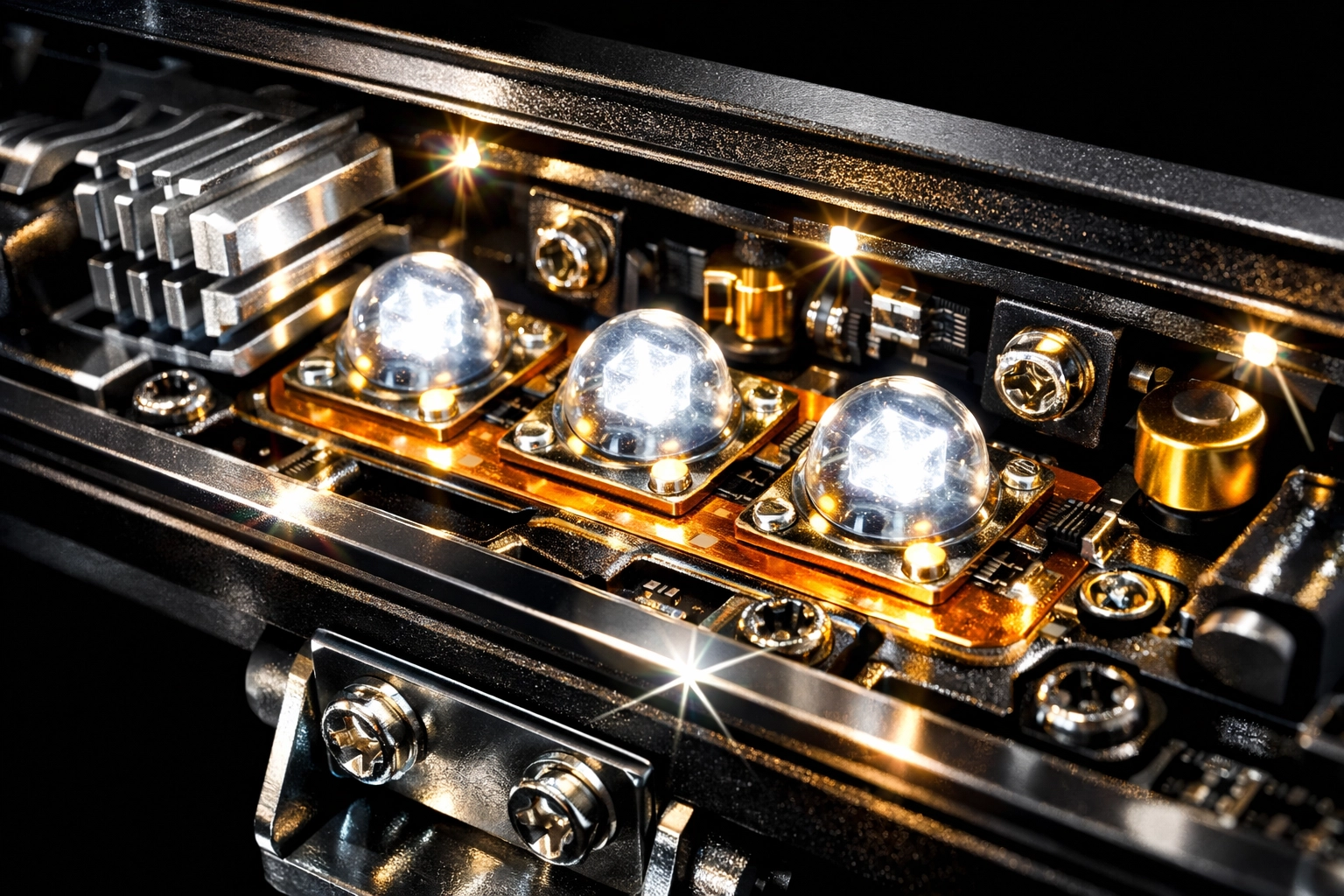
LED systems handle vibration and impact better than HIDs. The solid-state construction has no fragile filaments or glass bulbs filled with pressurized gas. This makes LEDs ideal for off-road vehicles encountering rough terrain.
Rigid Industries and Baja Designs engineer their LED products specifically for harsh conditions. Their housings withstand water, mud, dust, and extreme temperatures. Most units carry IP67 or IP68 waterproof ratings.
Energy Efficiency and Heat Management
LEDs convert approximately 90% of energy into light, with only 10% becoming heat. HIDs convert 70-80% to light, generating more waste heat. This efficiency difference affects electrical system load.
LED lights require less amperage draw from your vehicle's alternator. This matters when running multiple auxiliary lights on trucks or off-road rigs. Lower power consumption leaves more electrical capacity for other accessories.
HIDs run hotter than LEDs during operation. This heat offers an advantage in cold climates. Snow and ice melt faster on HID lenses, maintaining clear light output. LEDs may accumulate snow buildup in harsh winter conditions.
Most LED systems include built-in cooling fans or heat sinks. These components dissipate heat effectively but add complexity. Quality brands like Rigid Industries design thermal management systems that operate reliably for years.
Installation Compatibility
HID bulbs fit both projector and reflector-style housings. This provides more retrofit flexibility for older vehicles. The gas-discharge arc creates light similar to standard halogen bulb placement.
LEDs work optimally in reflector housings. Projector-style headlights may require complete assembly replacement for proper LED conversion. The directional nature of LED chips affects beam pattern in projector lenses.
Off-road auxiliary lighting installs differently than headlight replacements. Light bars, pods, and cube lights mount externally using brackets. Both HID and LED options exist for auxiliary applications, though LED dominates the off-road lighting market.
Rigid Industries and Baja Designs manufacture complete mounting solutions for various vehicle platforms. Their kits include brackets, wiring harnesses, and installation hardware. Most installations complete in under two hours with basic tools.
Cost Analysis
HIDs cost approximately 30% less than equivalent LED lights at initial purchase. This makes HID technology attractive for budget-conscious upgrades. However, total cost of ownership tells a different story.
LED lights last three times longer than HIDs. The extended lifespan reduces replacement costs over vehicle ownership. When factoring in labor and downtime, LEDs provide better long-term value.
Premium LED manufacturers like Rigid Industries and Baja Designs charge more upfront but include comprehensive warranties. Many products carry limited lifetime warranties covering defects and performance issues.
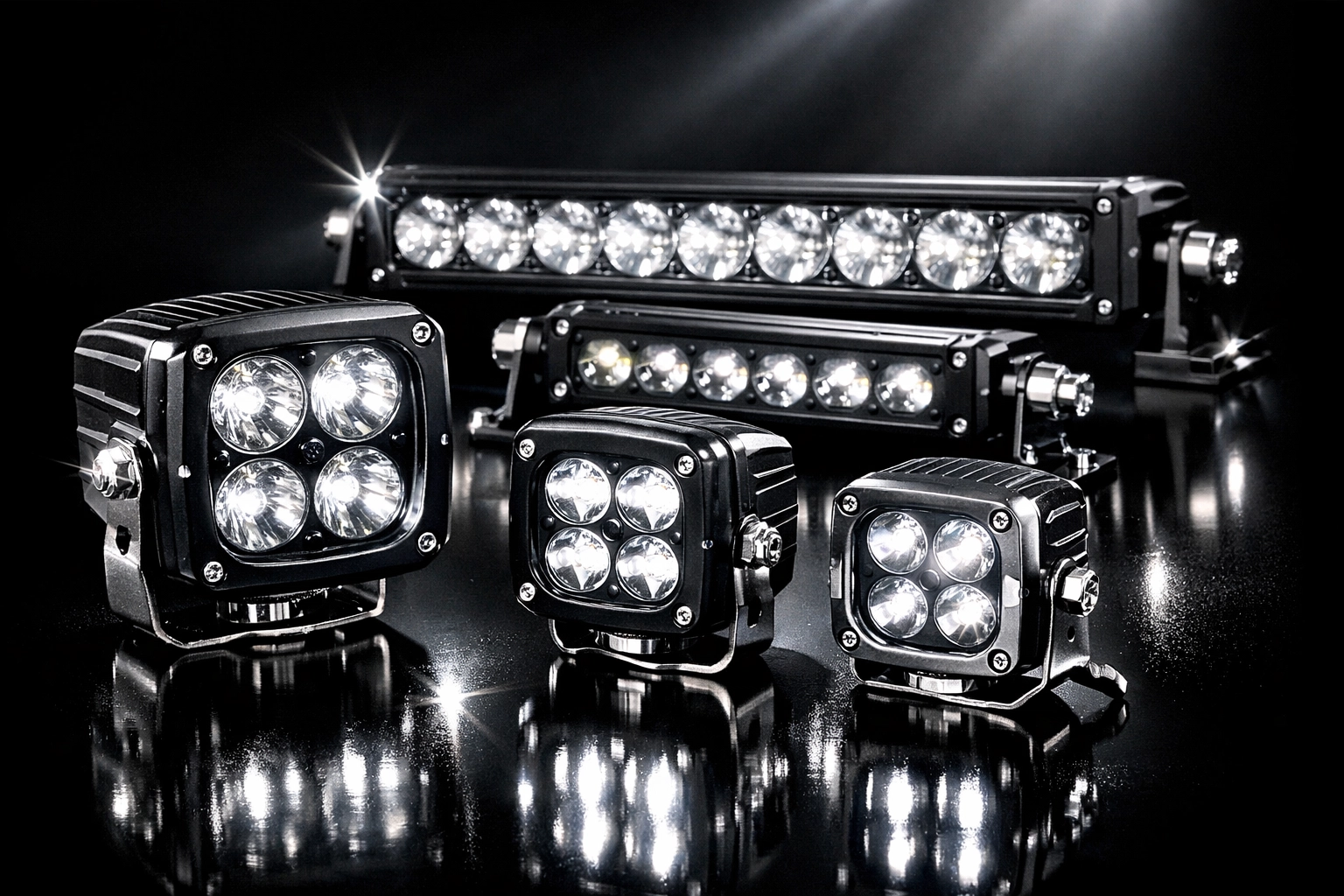
DIY Customs Store ships nationwide to all 50 states with free shipping on orders over $200. This eliminates local markup and shipping costs for premium lighting products. The outlet clearance section offers discounted Rigid Industries and Baja Designs units with minor cosmetic imperfections.
Off-Road Lighting Applications
Off-road vehicles require lighting configurations beyond standard headlights. Rock crawling, desert racing, and trail running demand different beam patterns and mounting locations.
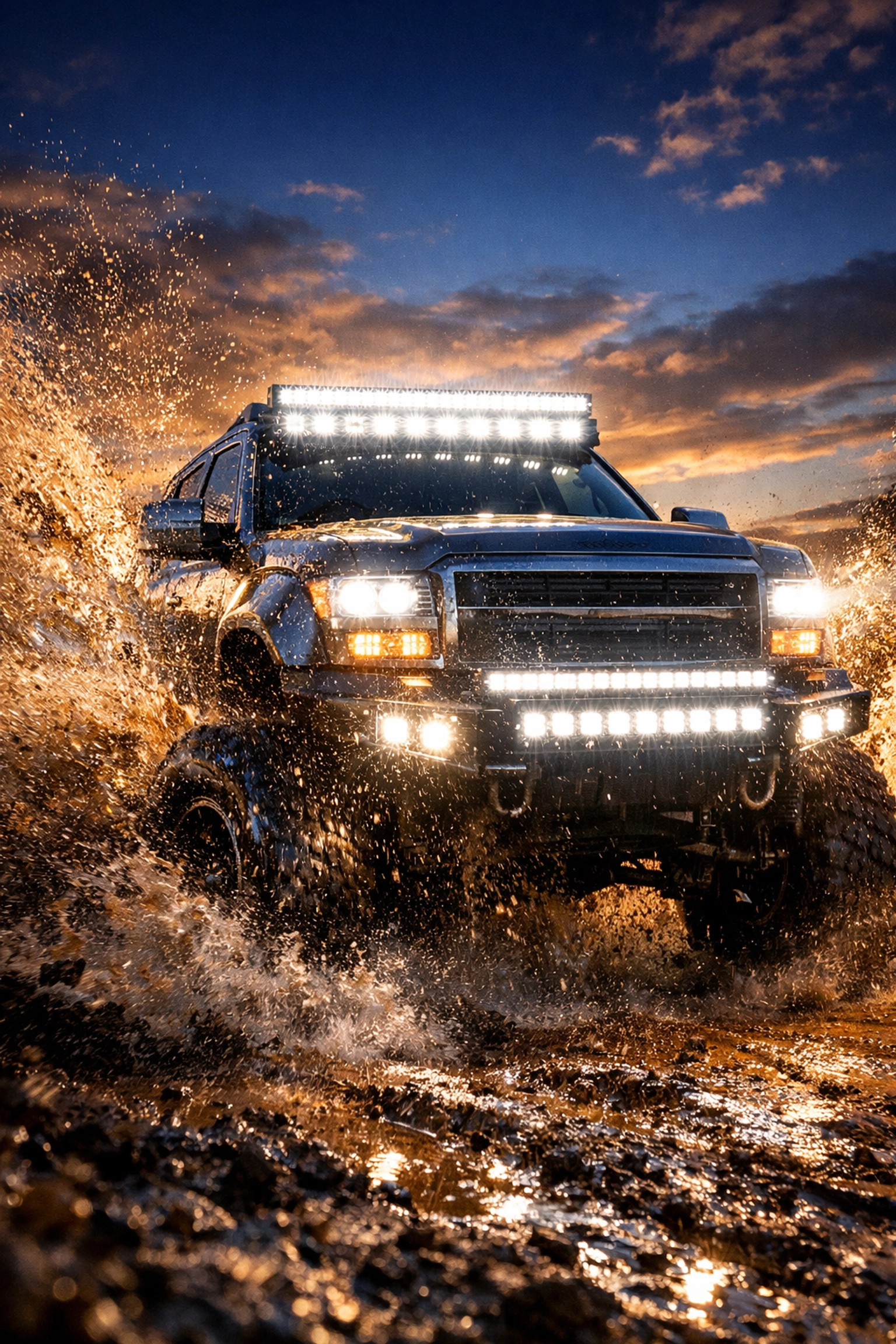
LED technology dominates off-road lighting due to shock resistance and efficiency. Light bars provide wide flood illumination for low-speed trail navigation. Spot beams extend visibility for high-speed desert runs.
Rigid Industries manufactures specialized patterns including Hyperspot, Driving, and Flood options. Their D-Series and SR-Series lights allow custom configuration for specific terrain types. Baja Designs offers Squadron and S8 series with similar versatility.
Combination patterns blend spot and flood elements in single housings. These hybrid beams work well for mixed driving conditions. Most off-road enthusiasts run multiple light types positioned at different mounting points.
Color Temperature Considerations
HIDs produce light in the 4000K-6000K range, appearing slightly blue-white. This color temperature cuts through fog and precipitation effectively. Some drivers prefer the crisp white appearance for aesthetic reasons.
LEDs range from 3000K amber to 6500K bright white. Amber LEDs penetrate dust and fog better than white lights. White LEDs provide better color recognition for identifying obstacles.
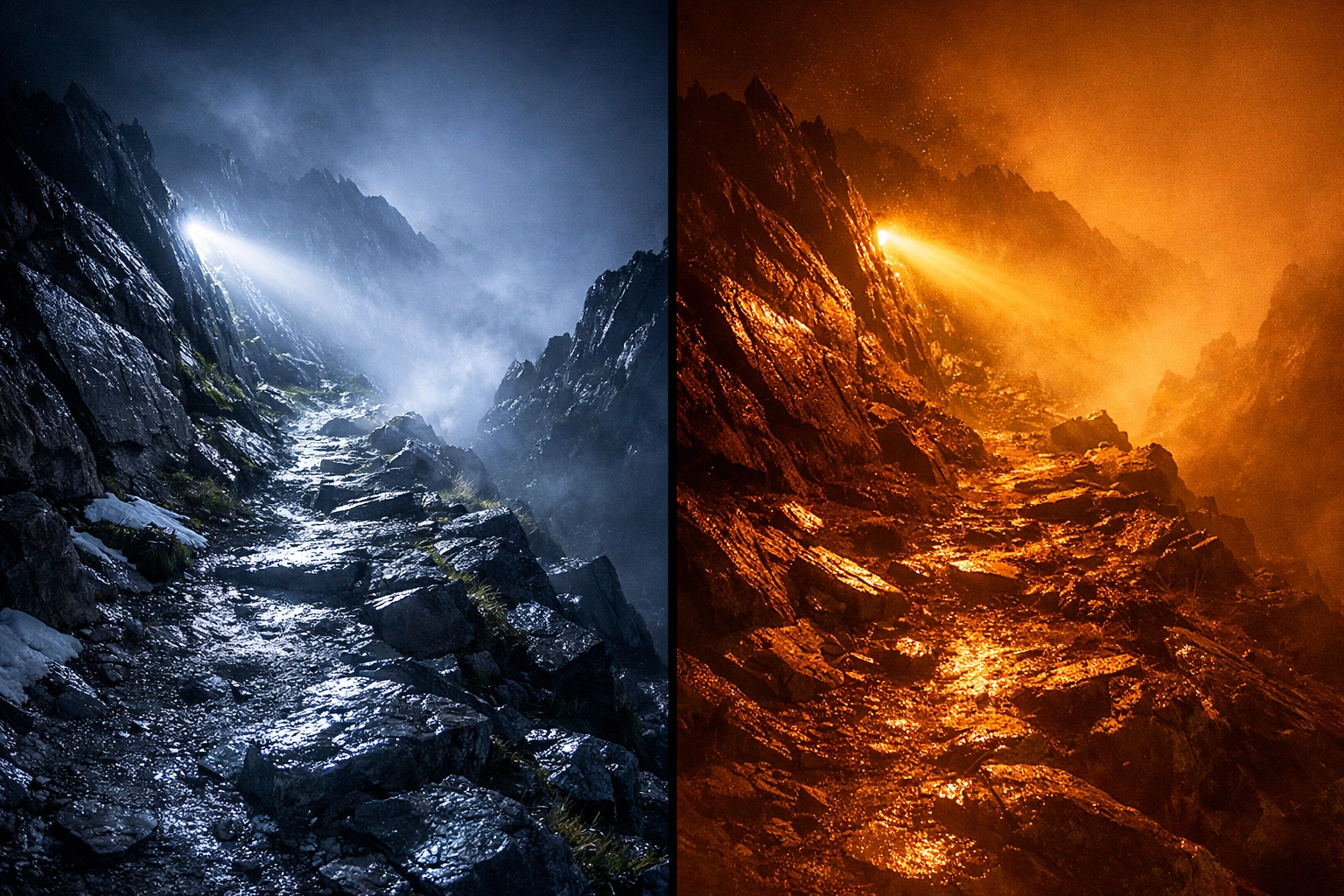
Rigid Industries offers selective amber LEDs specifically for dusty or foggy conditions. These lights improve visibility when white light reflects off airborne particles. Many off-roaders use white primary lights with amber auxiliary lights.
Baja Designs includes color options in several product lines. Their amber lenses swap easily on certain models. This allows switching between white and amber depending on conditions.
Making the Right Choice
LED lighting provides superior performance for most applications. Immediate full brightness, longer lifespan, and better efficiency justify the higher initial cost. Off-road enthusiasts benefit most from LED durability and shock resistance.
HID lighting makes sense for budget-focused upgrades or cold-climate driving. The lower purchase price and snow-melting heat output offer practical advantages. However, the shorter lifespan increases long-term costs.
For off-road and auxiliary lighting, LED technology dominates the market. Rigid Industries and Baja Designs set industry standards for build quality and performance. Their products withstand extreme conditions while providing reliable illumination.
DIY Customs Store carries extensive Rigid Industries and Baja Designs inventory. Browse lighting products at https://diycustoms.store with nationwide shipping to all 50 states. Orders over $200 ship free, and the outlet section offers premium brands at clearance pricing.
Professional installation advice available for all products. Whether upgrading headlights or building a complete off-road lighting system, proper component selection matters. Contact DIY Customs Store for product recommendations specific to your vehicle and driving conditions.
SEO Keywords: HID vs LED lighting, off-road lighting, Rigid Industries, Baja Designs, LED light bars, vehicle lighting upgrade, automotive lighting, truck lighting, off-road lights
Meta Description: Compare HID and LED lighting technology for vehicles. Learn which option provides better brightness, durability, and value for off-road and street applications.
Excerpt: HID and LED lights both outperform halogen bulbs, but which technology suits your vehicle best? Compare brightness, lifespan, cost, and off-road performance to make an informed lighting upgrade decision.