

RGB vs. Single-Color LED: Choosing the Right Off-Road Lighting for Your Build
RGB vs. Single-Color LED: Choosing the Right Off-Road Lighting for Your Build
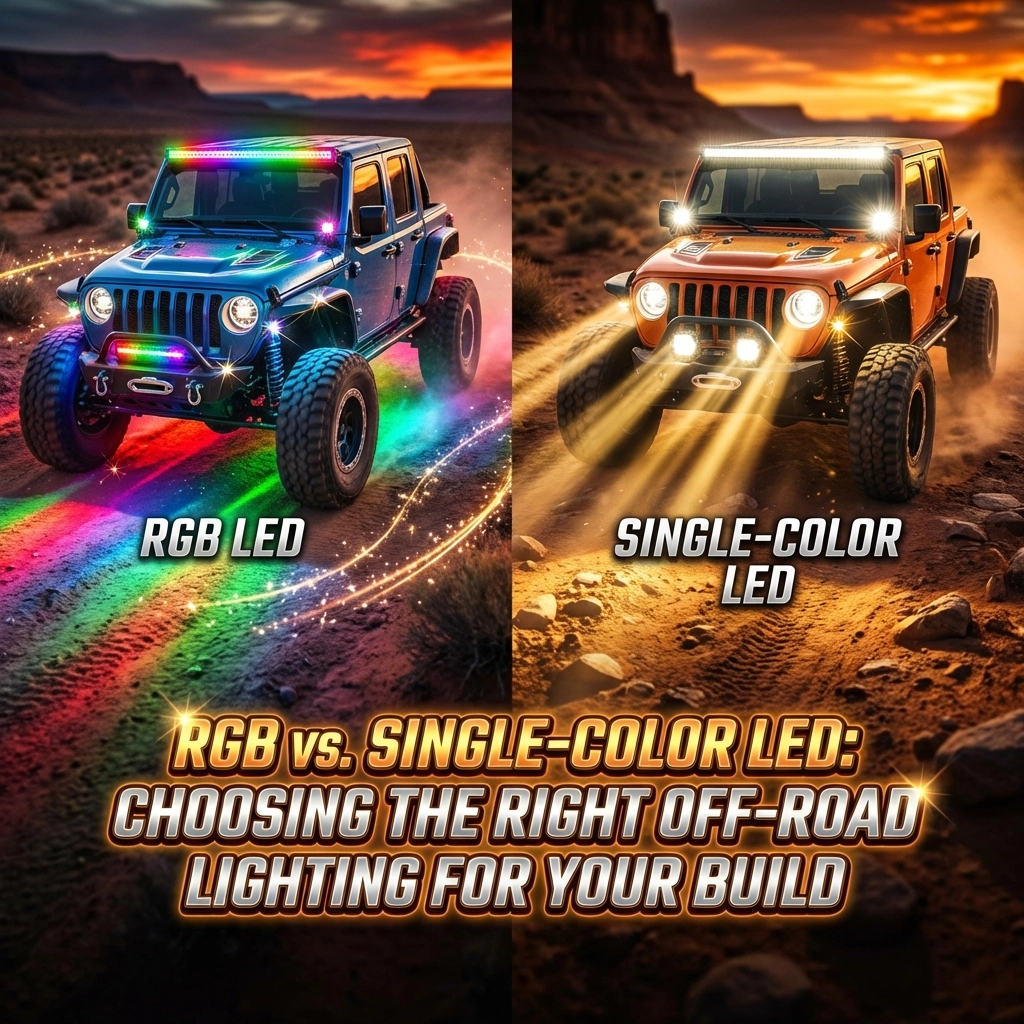
When building your ultimate off-road machine, lighting choices can make or break your setup. The decision between RGB and single-color LED lighting affects everything from your budget to installation complexity to trail performance. Let's break down the real differences to help you make the right call for your build.
Understanding RGB LED Technology
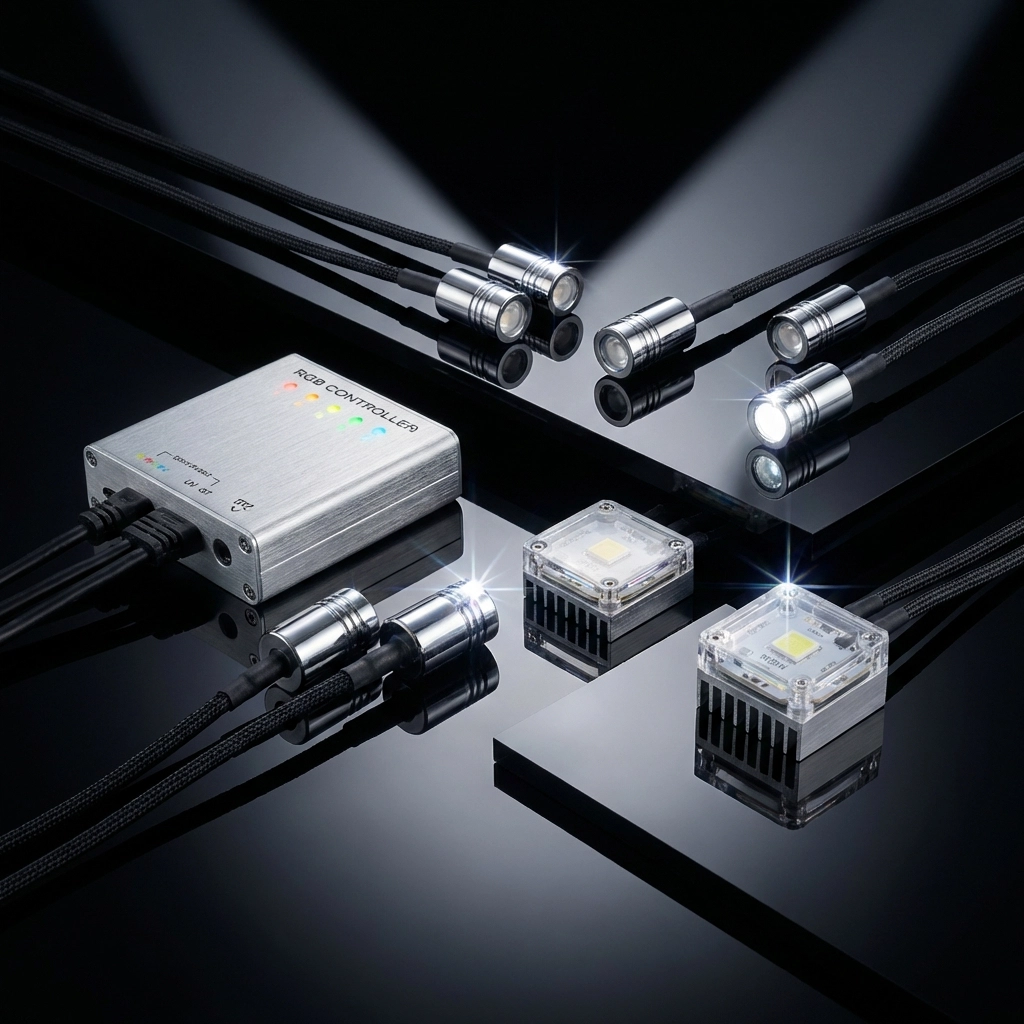
RGB lighting systems use red, green, and blue diodes that combine to create millions of color combinations. These systems require a controller to manage color mixing, brightness levels, and dynamic effects. Popular off-road brands like Rigid Industries and Baja Designs offer RGB options that integrate with smartphone apps for wireless control.
The technology allows you to match your vehicle's paint scheme, coordinate with interior lighting, or create attention-grabbing displays at events. You can program static colors, breathing effects, color cycling, or even sync lights to music during camping trips.
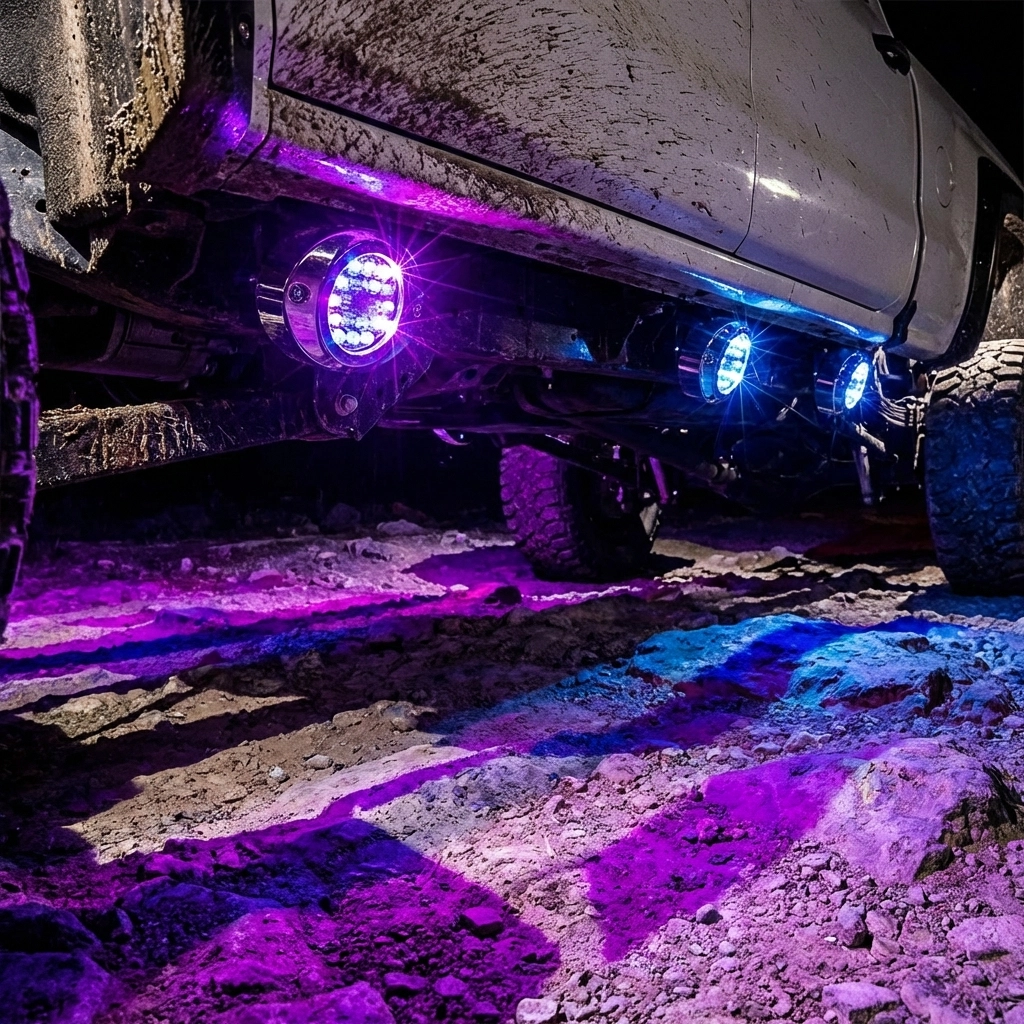
However, RGB systems demand more power and generate additional heat compared to single-color alternatives. The complex circuitry also introduces more potential failure points, particularly in harsh off-road environments where vibration and moisture are constant threats.
Single-Color LED Advantages
Single-color LED lights excel in simplicity and reliability. Whether you choose classic white, amber for dust penetration, or red for night vision preservation, these systems offer straightforward installation and operation. KC HiLiTES and similar brands we carry focus heavily on single-color options that prioritize durability over flashy features.
Installation requires basic wiring knowledge. Most single-color setups connect directly to your vehicle's electrical system through simple positive and negative connections. No controllers, no programming, no smartphone apps – just flip the switch and you have light.
The reduced complexity translates to lower costs across the board. Initial purchase price, installation time, and potential repair expenses all favor single-color systems. For budget-conscious builders, this difference can free up funds for other critical upgrades.
Performance and Brightness Comparison
Light output tells the real story between these technologies. Single-color white LEDs typically produce more lumens per watt than RGB systems running in white mode. This efficiency gap exists because RGB lights must balance three different diode types, while single-color systems optimize everything for one specific wavelength.
For actual trail use, this brightness difference matters significantly. Rock crawling, high-speed desert runs, and technical forest trails all benefit from maximum light output. RGB systems running in colored modes produce even less usable light for navigation purposes.
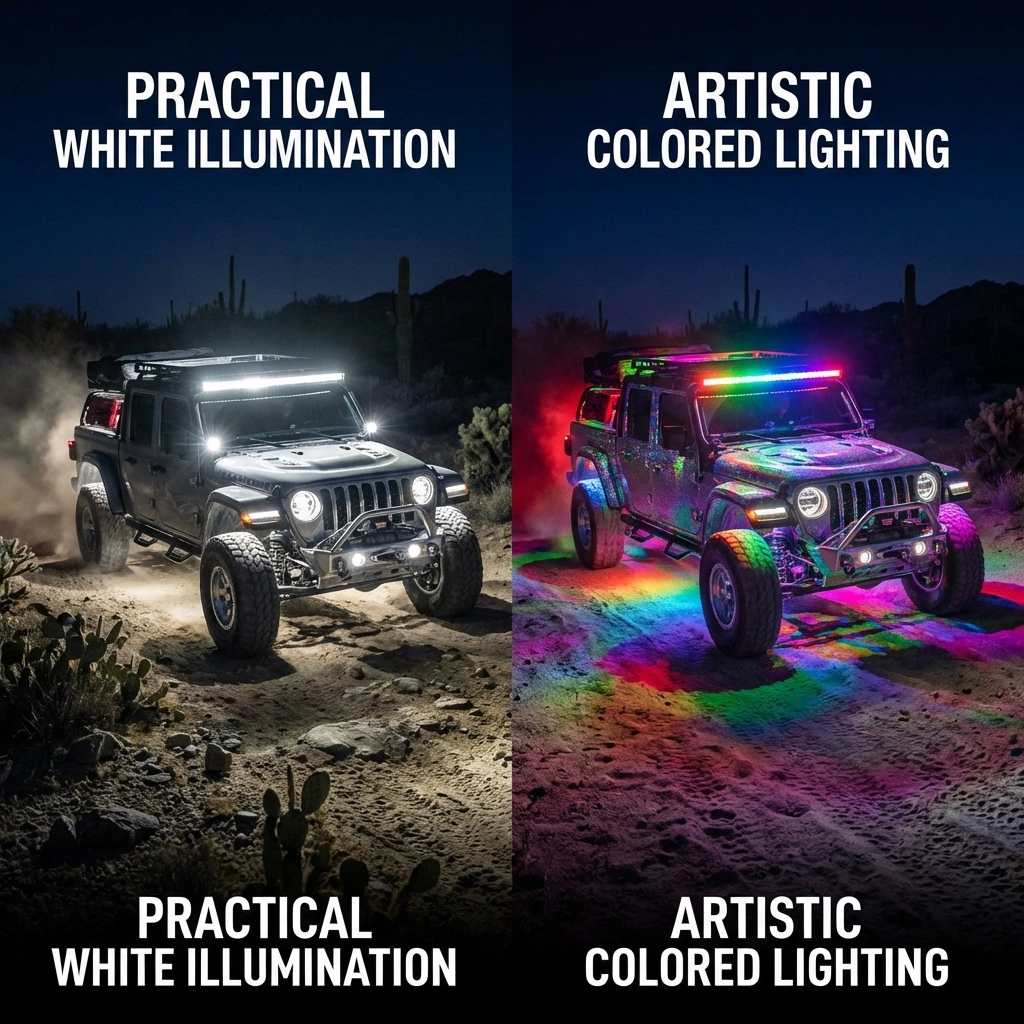
However, RGB systems shine for camp lighting and vehicle showcasing. The ability to dial in low-intensity colored light preserves night vision better than bright white LEDs. Red mode works particularly well for map reading and equipment setup without ruining your natural night vision.
Cost Analysis
Budget planning requires honest cost comparison. RGB rock light kits typically cost 2-3 times more than equivalent single-color setups. A quality 8-pod RGB system might run $400-600, while comparable single-color kits cost $150-300.
Installation costs also differ substantially. RGB systems require controller mounting, additional wiring runs, and programming time. Professional installation might add $200-400 to RGB projects versus $100-200 for single-color systems.
Long-term costs favor single-color systems too. Replacement parts cost less, troubleshooting is simpler, and warranty claims are less common. RGB controllers represent the most frequent failure point, and replacement costs $100-200 depending on the system.
Don't forget power consumption differences. RGB systems draw more current, which might require electrical system upgrades like larger alternators or additional battery capacity. These hidden costs can add hundreds to your total project budget.
Installation Requirements
RGB installation demands careful planning. Controller placement requires weather protection and accessible mounting locations. Wiring harnesses are more complex, often requiring 6-8 wires per light versus 2 wires for single-color systems.
Most RGB systems use proprietary connectors that require specific tools or adapters. Extending wiring runs becomes complicated when dealing with multi-conductor cables and weatherproof connections.
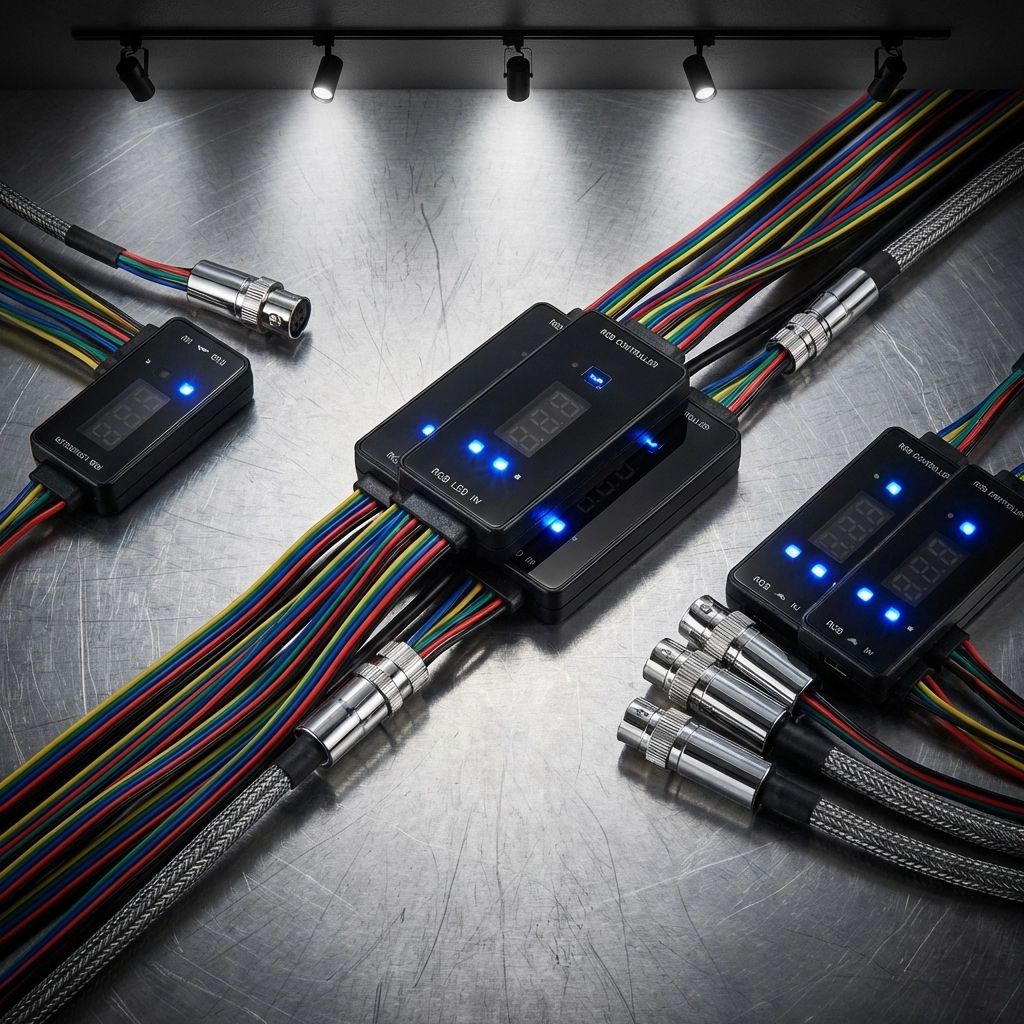
Single-color installation follows standard automotive wiring practices. Basic electrical knowledge, wire strippers, and heat shrink connectors handle most installations. Many enthusiasts complete entire single-color rock light installations in 2-3 hours versus full-day RGB projects.
When RGB Makes Sense
RGB systems excel for show vehicles and multi-use builds. If you attend off-road events, car shows, or camping gatherings where visual impact matters, RGB offers unmatched versatility. The ability to coordinate lighting with your vehicle's theme or create dynamic displays justifies the extra cost for many builders.
Rock racing and competitive events sometimes benefit from RGB systems too. Different colors can help distinguish your vehicle in dusty conditions or communicate with pit crews during night races.
Social media content creation drives many RGB purchases. The visual impact of color-changing lights creates engaging video content and photography that stands out in crowded social feeds.
Single-Color Strategic Uses
Pure functionality favors single-color systems. Serious trail runners, professional guides, and utility-focused builds benefit from maximum light output and bulletproof reliability. Work trucks, emergency vehicles, and commercial applications almost universally choose single-color systems.
Budget builds represent another clear single-color advantage. When every dollar counts toward essential upgrades like suspension, armor, or recovery gear, single-color lighting delivers maximum bang for your buck.
Maintenance simplicity matters for remote operators. Guide services, mining operations, and expedition vehicles prioritize systems that field technicians can repair anywhere with basic tools.
RGBW: The Hybrid Option
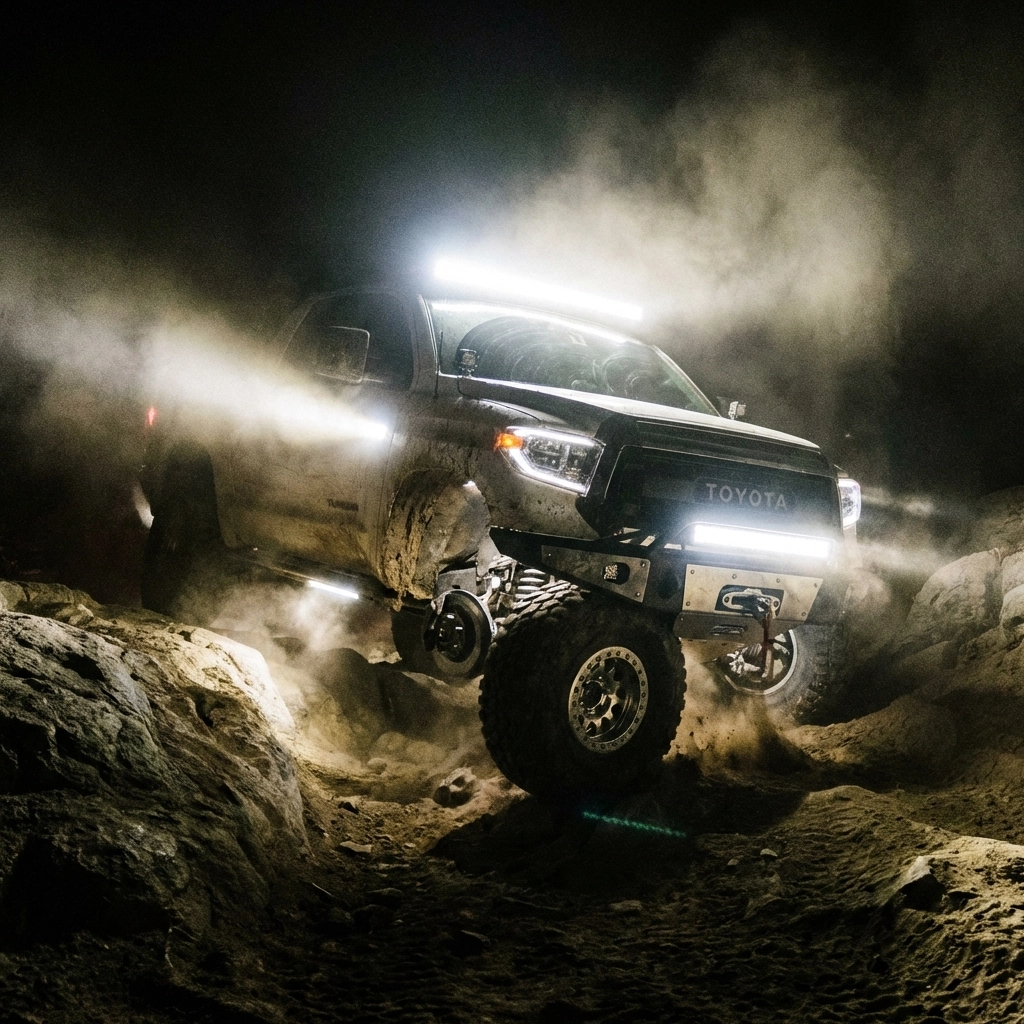
RGBW technology adds dedicated white LEDs to RGB systems, combining color versatility with improved white light output. This hybrid approach reduces the brightness penalty of RGB systems while maintaining color options.
Several premium brands we carry offer RGBW options that produce nearly single-color brightness levels in white mode while retaining full RGB functionality. These systems cost more than either pure RGB or single-color alternatives but deliver the best of both worlds.
RGBW makes sense for builds where you want color options but can't sacrifice functional light output. The technology particularly suits adventure builds that need maximum trail lighting but also want camp lighting versatility.
Making Your Decision
Choose RGB systems when:
- Visual impact matters for shows or social media
- You want camp lighting versatility
- Budget allows for 2-3x higher costs
- Installation complexity isn't a concern
- You prioritize customization over maximum brightness
Choose single-color systems when:
- Maximum light output is critical
- Budget constraints exist
- Simple installation and maintenance matter
- Reliability trumps features
- Professional or utility use is primary
Consider your actual usage patterns honestly. Many RGB system owners rarely use color functions after the initial novelty wears off. If 90% of your lighting use involves white light for trail navigation, single-color systems deliver better value and performance.
For builds where money isn't the primary constraint and you genuinely use both functional and aesthetic lighting, RGBW systems provide the most versatile solution despite their premium pricing.
Remember that quality matters more than technology choice. A well-built single-color system from established brands we carry will outlast cheap RGB alternatives every time. Focus on proven manufacturers with strong warranty support regardless of which technology you choose.
Check our current lighting selection and take advantage of fast shipping on orders over $200. Premium brands like Rigid Industries, Baja Designs, and KC HiLiTES offer proven solutions for any budget or application.