

The Foundation of Sound: Choosing the Right Speaker Wire for Your Custom Install
Speaker wire impacts audio quality in custom car audio installations. The right wire maintains signal strength from amplifier to speaker. Wrong wire causes power loss and reduced sound performance.
Wire Gauge Basics
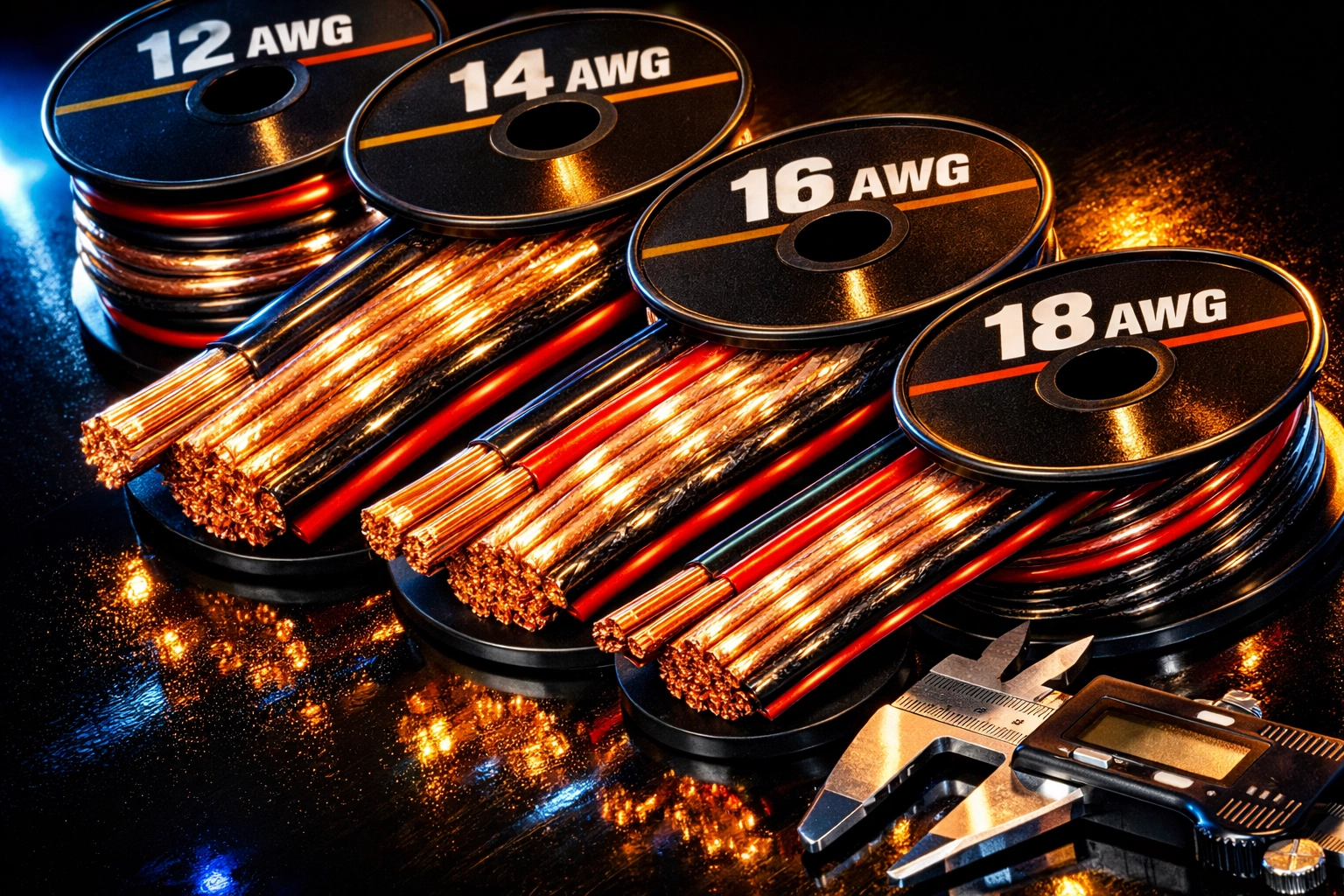
Wire gauge determines signal transmission capability. AWG (American Wire Gauge) uses inverse numbering: lower numbers indicate thicker wire. Car audio installations typically use 12 to 18 AWG wire.
Standard gauge recommendations:
- 12 AWG: High-power systems, subwoofers, amplifier runs over 20 feet
- 14 AWG: Component speakers, coaxial speakers, mid-range power levels
- 16 AWG: Tweeters, low-power applications, short runs under 10 feet
- 18 AWG: Factory replacement, budget installations
Thicker wire carries more current with less resistance. Resistance increases over distance. Match wire gauge to power requirements and cable length.
Calculating Wire Requirements
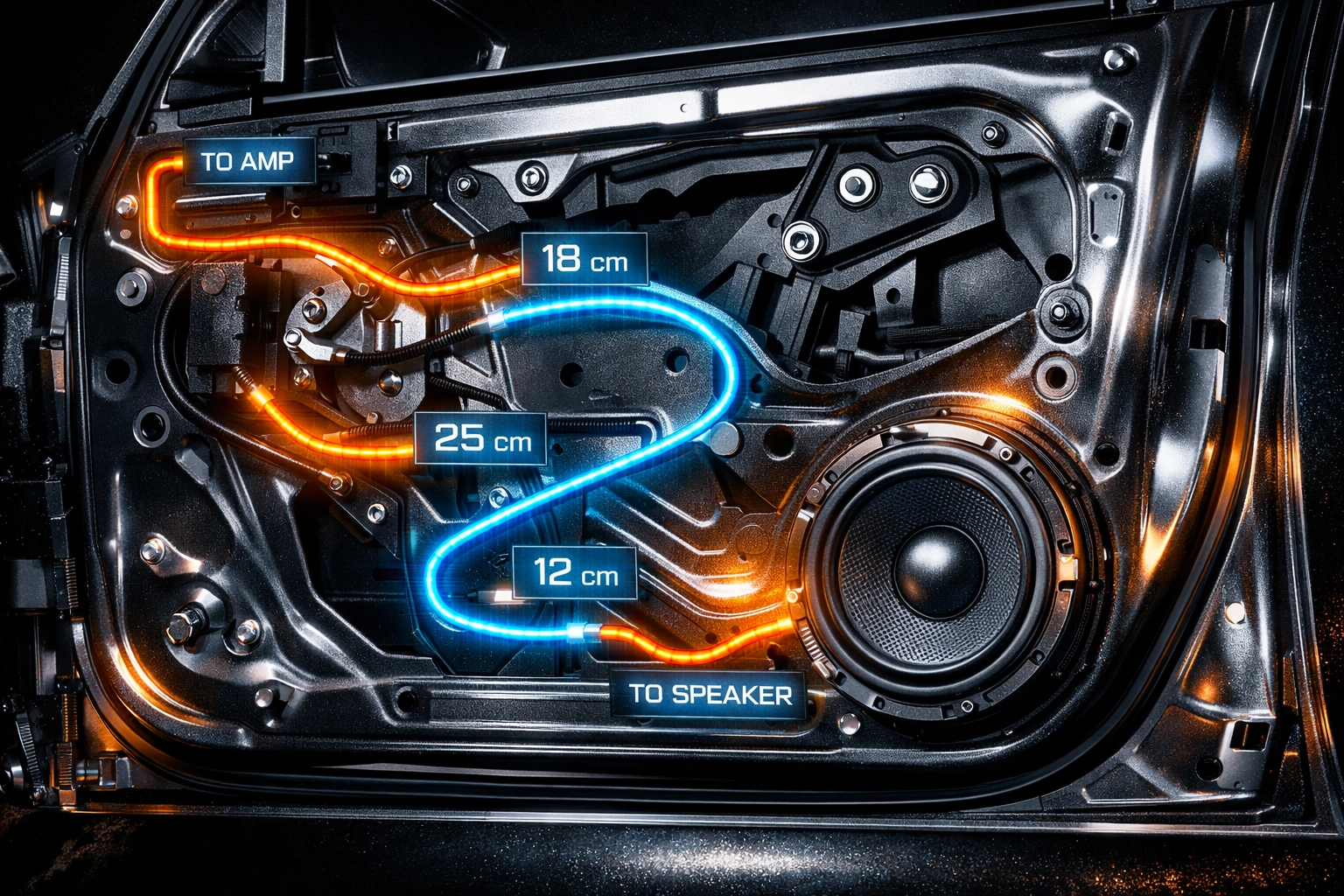
Measure actual routing distance in your vehicle. Run string or tape measure from amplifier location to each speaker mounting point. Account for routing through door jambs, around panels, and through firewall passages.
Add 15-20% to measured length for connections and routing flexibility. Excess wire prevents tension at terminals and simplifies installation adjustments.
For a component speaker set in front doors with amplifier in trunk:
- Measure trunk to each door: 15 feet average
- Add routing allowance: 3 feet
- Total per door: 18 feet
- Both doors: 36 feet minimum
Purchase slightly more than calculated needs. Extra wire accommodates mistakes and future modifications.
Conductor Configuration
Stranded wire contains multiple thin copper strands bundled together. Flexibility makes stranded wire ideal for car audio. Routing through tight spaces and around corners requires wire flexibility. Stranded wire resists breakage from vibration and movement.
Solid wire uses single copper conductor. Solid wire suits permanent, straight-run installations. Car audio installations rarely use solid wire due to vehicle vibration and tight routing spaces.
Select stranded wire for all car audio speaker installations.
Insulation Materials
Insulation protects conductors and prevents short circuits. Common materials include:
PVC (Polyvinyl Chloride): Standard insulation for car audio wire. Flexible, cost-effective, adequate for interior installations. Temperature range: -10°F to 105°F.
PE (Polyethylene): Superior moisture resistance and temperature tolerance. Better choice for marine applications or vehicles in extreme climates. Temperature range: -40°F to 176°F.
TPE (Thermoplastic Elastomer): High flexibility and durability. Premium option for professional installations requiring maximum bend radius.
Interior car audio installations use PVC successfully. Marine audio or extreme environment applications require PE or TPE insulation.
Oxygen-Free Copper (OFC)
Pure copper conductors without oxygen contamination provide better conductivity than standard copper. OFC wire reduces signal degradation and maintains audio fidelity.
Standard copper wire contains oxygen molecules that create resistance points. OFC manufacturing removes oxygen, creating uniform conductor structure.
Benefits for car audio:
- Lower electrical resistance
- Better high-frequency response
- Reduced signal loss over distance
- Longer conductor lifespan
OFC wire costs more than standard copper. High-end installations and systems using premium speakers like JL Audio components benefit from OFC wire investment.
CCA vs. Pure Copper
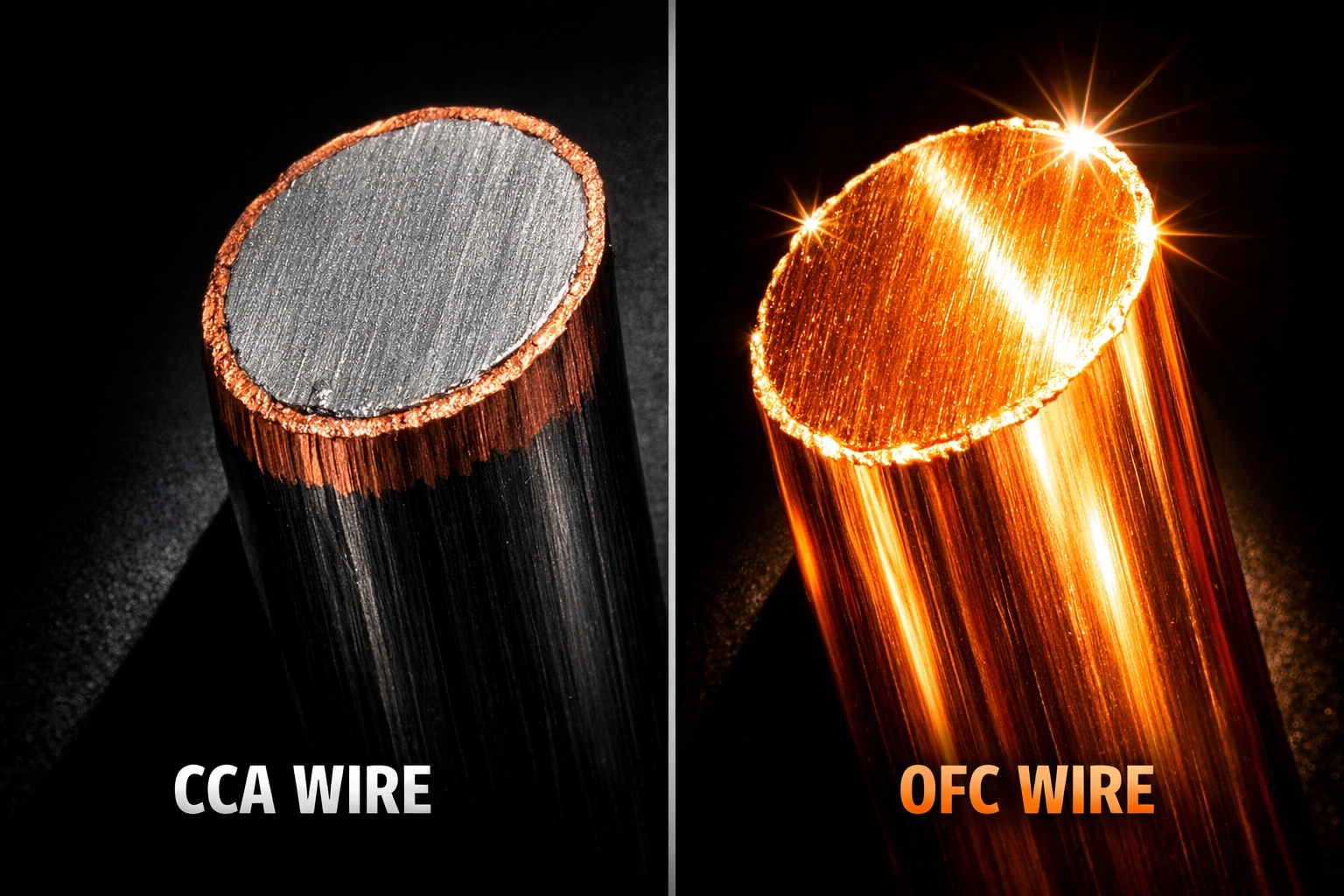
CCA (Copper-Clad Aluminum) wire uses aluminum core with thin copper coating. Manufacturers produce CCA wire as budget alternative to pure copper.
Avoid CCA wire for car audio installations.
CCA wire problems:
- 40% less conductivity than pure copper
- Requires thicker gauge for equivalent performance
- Oxidizes faster than copper
- Breaks more easily during installation
- Voids many amplifier warranties
Pure copper or OFC wire delivers reliable performance. Initial cost difference proves minor compared to system longevity and audio quality.
Connector Types
Bare wire works for most car audio speaker connections. Strip 1/4 to 3/8 inch of insulation. Twist strands tightly. Insert into terminal and secure.
Banana plugs provide quick-connect convenience for speakers with binding post terminals. Spring-loaded design maintains secure connection through vibration. Limited use in car audio due to space constraints around speaker terminals.
Spade terminals slide around binding posts and secure when tightened. Common in home audio, less frequent in car installations.
Pin connectors crimp onto wire ends for insertion into small terminals. Some OEM and aftermarket speakers use pin-style connectors.
Most car audio speakers accept bare wire connections. Maintain connection security with proper stripping, twisting, and terminal tightening.

Polarity and Color Coding
Speaker wire includes two conductors: positive and negative. Polarity consistency prevents phase cancellation and weak bass response.
Standard color coding:
- Positive (+): Copper, red stripe, or smooth jacket
- Negative (-): Silver, black stripe, or ribbed jacket
Mark wire during installation if color coding unclear. Connect positive amplifier terminal to positive speaker terminal. Connect negative to negative. Repeat for all speakers.
Phase issues cause:
- Weak or cancelled bass frequencies
- Poor stereo imaging
- Reduced overall output
Verify polarity before completing installation. Test with battery and observe speaker cone movement. All speakers should move same direction when connected identically.
Wire Routing Best Practices
Route speaker wire away from power cables and electrical systems. Parallel runs with power wire induce noise into audio signal. Maintain 6-inch minimum separation from power cables.
Cross power cables at 90-degree angles when separation impossible. Perpendicular crossings minimize interference.
Secure wire along routing path. Use zip ties, wire clips, or wire loom. Prevent wire contact with moving parts, sharp edges, or heat sources.
Protect wire passing through metal panels. Use grommets in firewall and door jamb passages. Grommets prevent insulation damage from vibration and sharp metal edges.
System Upgrade Considerations
Replace factory speaker wire during aftermarket speaker installation. Factory wire frequently uses inadequate gauge for aftermarket speaker power handling.
Verify wire gauge when adding amplifier to existing speakers. Under-gauged wire limits power delivery and reduces amplifier efficiency.
Calculate total system wire requirements before starting installation:
- Front speaker pairs
- Rear speaker pairs
- Subwoofer connections
- Amplifier to distribution block runs
Order complete installation in single wire purchase. Bulk packaging reduces per-foot cost. Consistent wire quality throughout system ensures uniform performance.
Professional Installation Support
DIY Customs Store serves automotive and marine audio enthusiasts nationwide. Browse car audio wire options at diycustoms.store with shipping to all 50 states.
Free shipping applies to orders over $200. Combine speaker wire with installation accessories, speakers, or amplifiers to qualify.
Questions about wire gauge for specific installation? Contact support for recommendations based on amplifier power, speaker specifications, and routing distance.
Wire Storage and Handling
Store unused wire in cool, dry location. Coil loosely to prevent kinks. Kinked wire creates weak points in conductor strands.
Label remaining wire with gauge and type. Future installations or repairs require matching wire specifications.
Protect wire ends from corrosion. Seal cut ends with electrical tape or heat shrink when storing partial spools.
Conclusion
Speaker wire selection impacts car audio system performance. Match wire gauge to power requirements and distance. Use stranded pure copper or OFC wire. Route carefully away from interference sources. Maintain proper polarity throughout installation.
Quality wire costs less than speakers or amplifiers but affects entire system output. Invest in appropriate wire gauge and material for installation requirements.
Shop car audio speaker wire at DIY Customs Store with nationwide shipping and competitive pricing on premium installation materials.
SEO Keywords: car audio speaker wire, speaker wire gauge, OFC speaker wire, car audio installation, speaker wire selection, automotive audio wire, copper speaker wire, wire gauge chart, car speaker installation, audio wire types
Meta Description: Learn how to choose the right speaker wire gauge and type for your car audio installation. Expert guide covers wire gauge, OFC vs CCA, routing, and connector options for optimal sound quality.
Excerpt: Speaker wire selection determines signal quality in custom car audio systems. This guide covers wire gauge, conductor types, insulation materials, and routing techniques for professional installation results.