

Top Marine Audio Upgrades Under $500 for 2026
Top Marine Audio Upgrades Under $500 for 2026
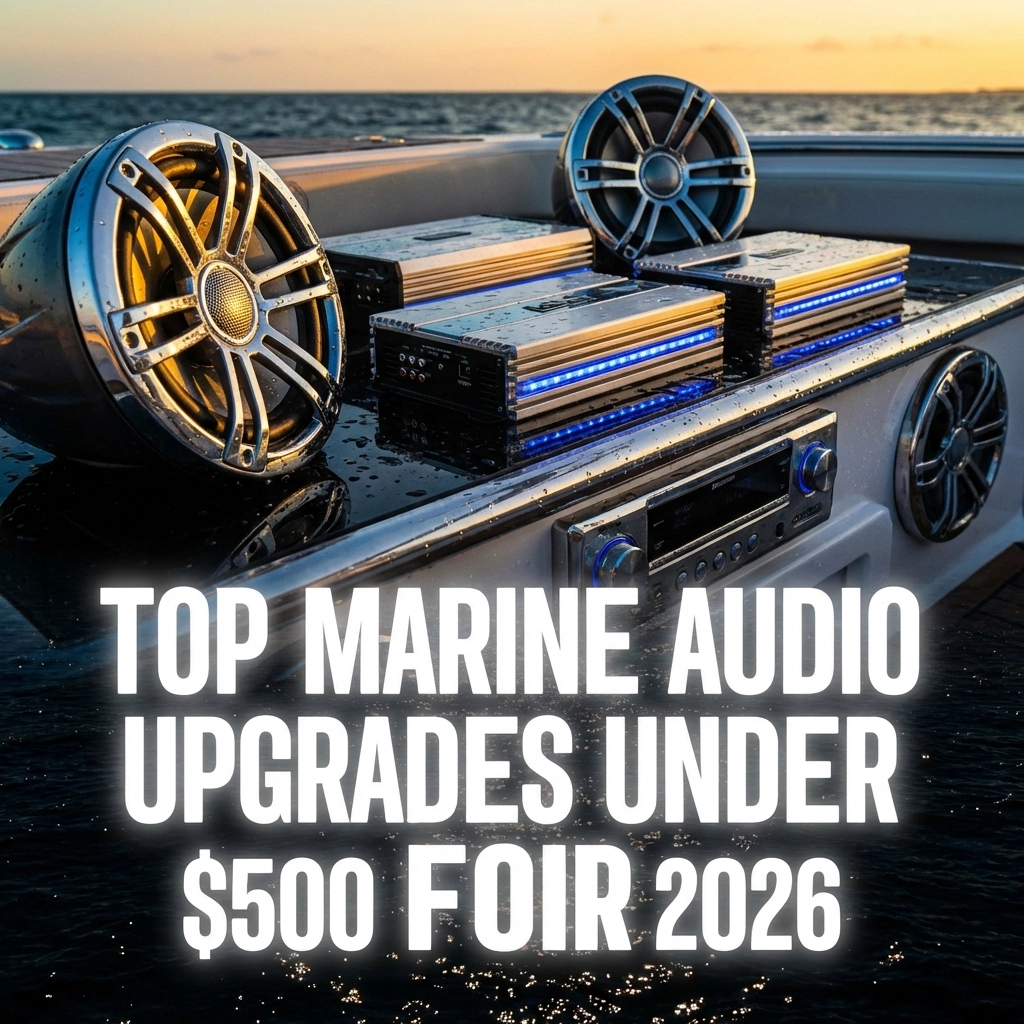
Upgrading your boat's audio system delivers immediate results. Marine entertainment systems require specialized components built for saltwater, UV exposure, and constant moisture. Budget-conscious boaters can achieve significant improvements with $500 or less when selecting the right combination of marine-rated equipment.
DIY Customs Store ships marine audio components nationwide to all 50 states. Free shipping applies to orders over $200. Order online at diycustoms.store for fast delivery across America.
Marine Receiver Upgrades
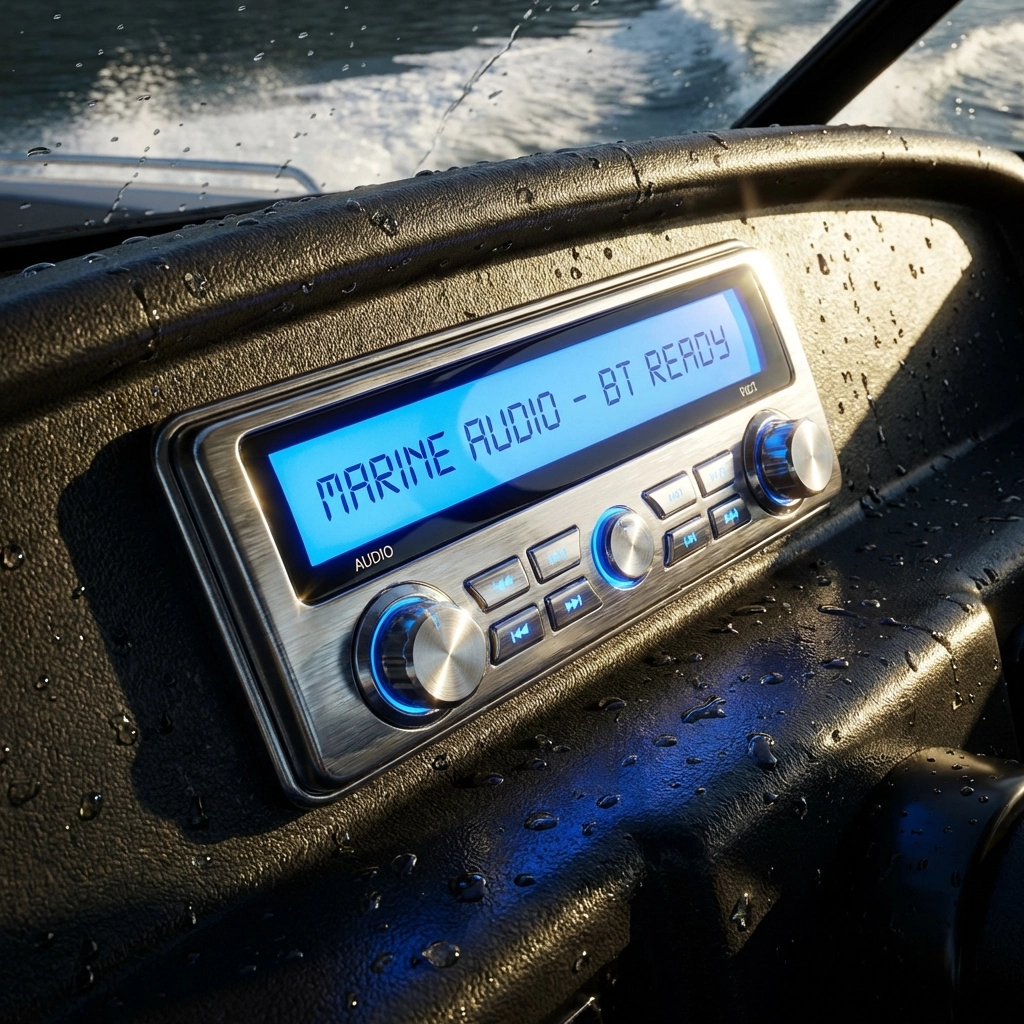
Marine receivers form the foundation of boat audio system upgrades. Entry-level marine receivers from Kenwood, Pioneer, and Boss Audio provide Bluetooth connectivity, USB inputs, and weatherproof construction. These units replace basic factory systems with modern streaming capabilities.
Mid-range marine receivers include advanced features like multi-zone control, satellite radio compatibility, and enhanced preamp outputs. JL Audio and Rockford Fosgate offer premium marine receivers with superior build quality and extended warranties.
Marine receivers require IPX5 or higher water resistance ratings. Look for units with conformal coating on circuit boards and sealed rear connections. UV-resistant faceplates prevent fading and cracking from sun exposure.
Speaker System Selections
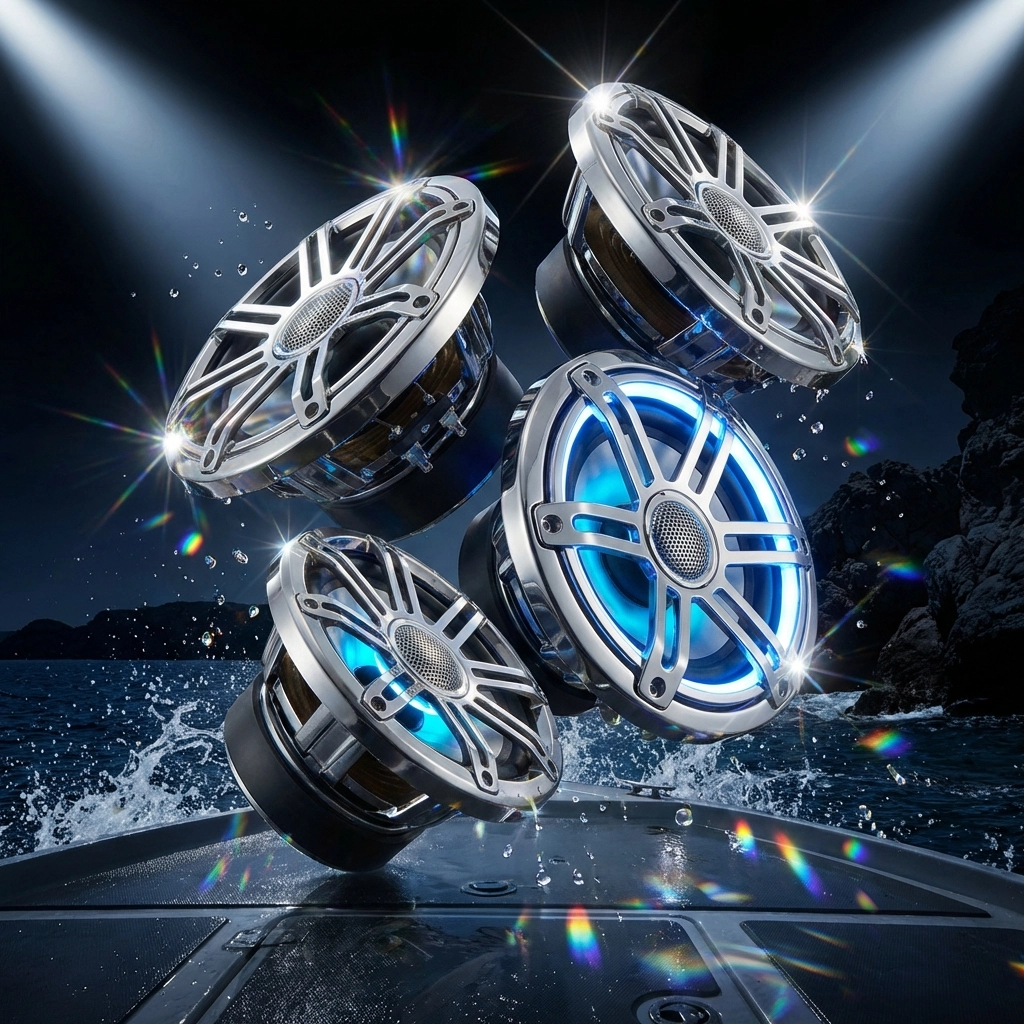
Marine speakers must withstand harsh environmental conditions while delivering clear audio output. Kicker marine speakers feature polypropylene cones and rubber surrounds that resist saltwater corrosion. Boss Audio provides budget-friendly marine speakers with adequate performance for recreational boating.
Polk Audio marine speakers include integrated RGB lighting systems for enhanced aesthetics. Sony marine speakers offer reliable performance at competitive price points. Pioneer marine speakers provide excellent mid-range options with proven durability.
6.5-inch speakers represent the most common marine speaker size. This diameter fits most factory speaker locations without modifications. 8-inch speakers deliver increased output but require larger mounting spaces.
Component speaker systems separate tweeters from woofers for improved sound staging. Coaxial speakers combine both elements in single units for simplified installation. Budget allocations should prioritize speaker quantity over individual speaker cost for basic system improvements.
Amplifier Integration
Marine amplifiers boost power output and improve overall system performance. Rockford Fosgate marine amplifiers include built-in cooling systems and corrosion-resistant hardware. Kicker marine amplifiers provide reliable power delivery in compact chassis designs.
Two-channel amplifiers power front speaker pairs efficiently. Four-channel amplifiers accommodate front and rear speaker zones. Mono amplifiers dedicate full power output to subwoofer applications.
Amplifier mounting locations require ventilation and protection from direct water exposure. Under-dash installations work for smaller amplifiers. Dedicated amplifier compartments suit larger multi-channel units.
Power calculations determine amplifier requirements. Match amplifier RMS output to speaker power handling specifications. Avoid significant power mismatches that damage speakers or waste amplifier capacity.
Subwoofer Additions
Marine subwoofers add low-frequency output that standard speakers cannot reproduce. Kicker marine subwoofers feature weatherproof enclosures and specialized drivers. JL Audio marine subwoofers provide premium performance with advanced engineering.
Powered subwoofers include built-in amplification for simplified installation. Passive subwoofers require separate amplifiers but offer greater flexibility in system design. Tube-style subwoofers fit tight spaces while maintaining reasonable output levels.
Subwoofer placement affects performance significantly. Cabin installations provide protected environments but require careful waterproofing. Deck installations expose subwoofers to weather but simplify wiring runs.
Budget subwoofer systems from Boss Audio deliver basic low-frequency enhancement. Mid-range options from Pioneer and Sony balance performance with affordability. Premium subwoofers justify higher costs through superior build quality and extended warranties.
Installation Planning
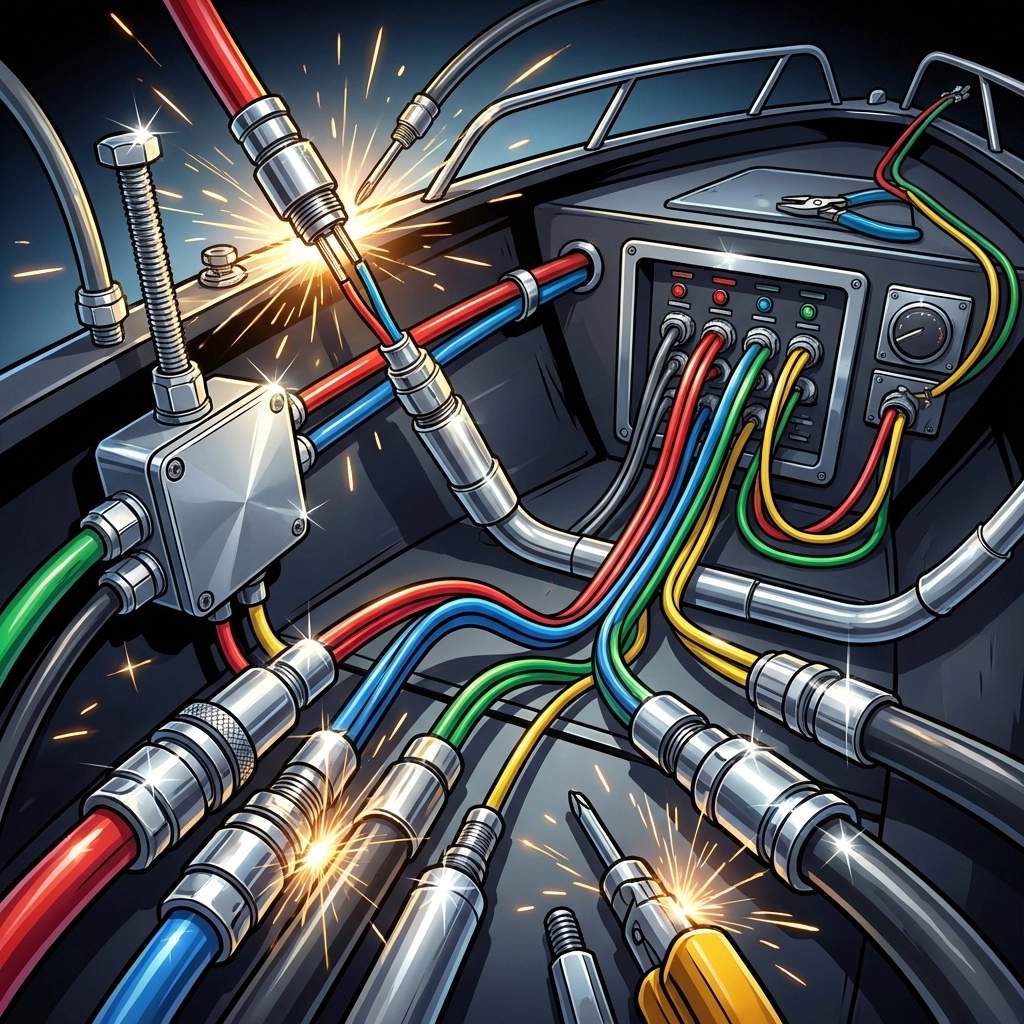
Marine installations require specialized tools and techniques. Stainless steel fasteners prevent corrosion in saltwater environments. Marine-grade wire resists moisture penetration and UV degradation.
Power connections need circuit breakers or fuses sized appropriately for amplifier draws. Ground connections require clean metal-to-metal contact with corrosion protection. Speaker wire runs should avoid sharp edges and moving parts.
Water intrusion poses the greatest threat to marine audio systems. All connections need waterproof sealing or protective covers. Component mounting locations should drain water rather than collecting it.
Professional installation services ensure proper weatherproofing and warranty compliance. DIY installations save labor costs but require careful attention to marine-specific requirements.
Budget Allocation Strategies
$500 budgets require strategic component selection for maximum impact. Prioritize receiver upgrades first for immediate connectivity improvements. Add speakers next for noticeable audio quality gains.
Entry-level complete systems include receiver and speaker pairs within budget constraints. Boss Audio and Pioneer offer complete marine packages under $400. Reserve remaining budget for installation supplies and accessories.
Mid-range strategies focus on fewer premium components rather than complete system replacement. Single amplifier additions significantly improve existing speaker performance. Quality speaker pairs outperform multiple budget speakers.
Premium approaches invest full budgets in flagship components from JL Audio or Rockford Fosgate. Single premium amplifiers or speaker sets provide building blocks for future system expansion.
Component Compatibility
Marine audio components must work together efficiently. Receiver preamp outputs should match amplifier input sensitivities. Speaker impedance loads need compatibility with amplifier specifications.
Power handling ratings require careful matching between amplifiers and speakers. Underpowered speakers distort at moderate volumes. Overpowered speakers risk damage from excessive input levels.
Impedance mismatches reduce amplifier efficiency and can cause overheating. Most marine components operate at 4-ohm impedances. Verify compatibility before purchasing multiple components.
Wiring harnesses simplify receiver installations in boats with existing audio systems. Adapter cables connect aftermarket components to factory wiring without modifications.
Weatherproofing Essentials
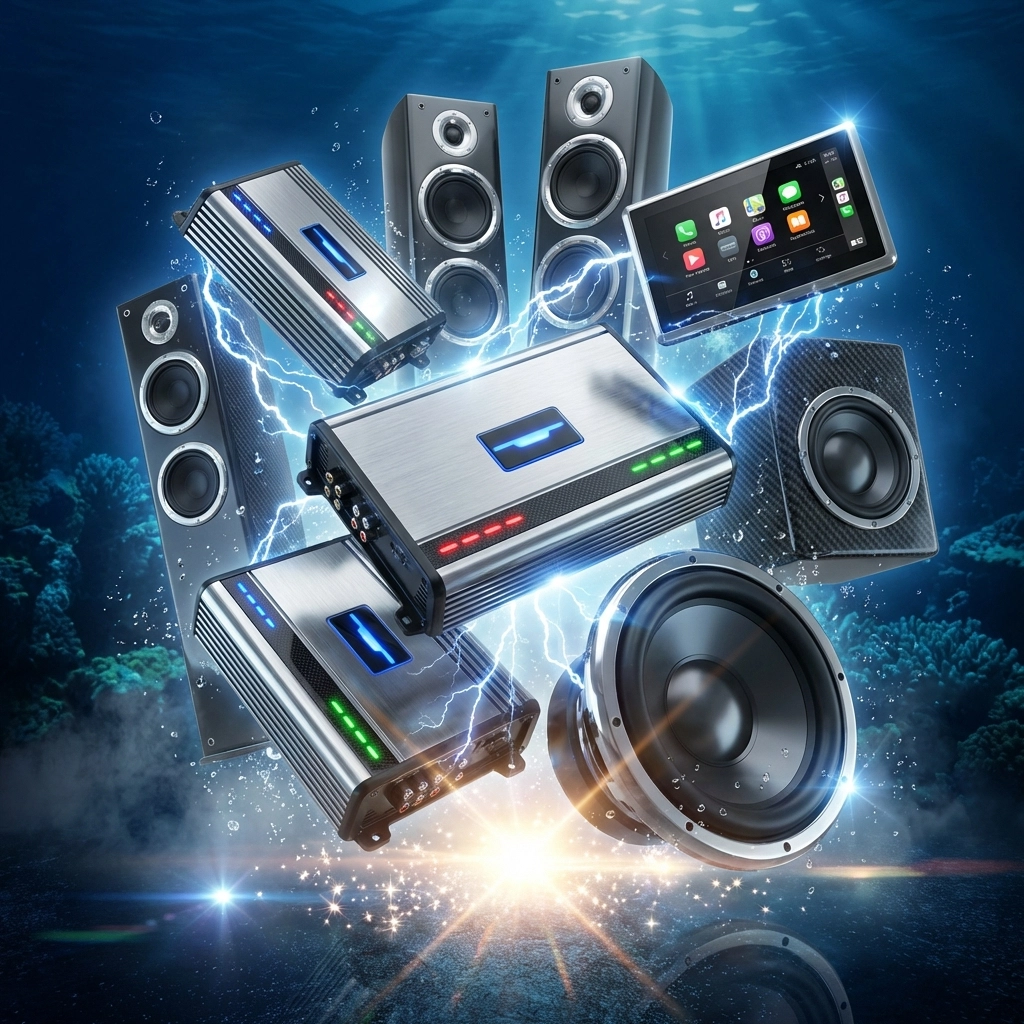
Marine environments demand superior protection against moisture intrusion. All electrical connections require dielectric grease or waterproof connectors. Component mounting points need sealed gaskets or rubber boots.
Drainage considerations prevent water accumulation around sensitive electronics. Angled mounting positions allow water runoff. Ventilation gaps maintain air circulation while excluding direct water contact.
UV protection preserves component appearance and functionality. Marine-rated plastics resist fading and cracking. Protective covers shield equipment during storage periods.
Salt spray accelerates corrosion on unprotected metal surfaces. Stainless steel hardware resists corrosion better than standard fasteners. Regular freshwater rinses remove salt deposits from exposed components.
Performance Optimization
Proper system tuning maximizes component potential within budget constraints. Receiver equalizer settings compensate for boat cabin acoustics. Amplifier gain controls prevent distortion while maintaining output levels.
Speaker positioning affects sound quality significantly. Angled installations direct audio toward listening positions. Avoid mounting speakers directly into hard surfaces that cause unwanted reflections.
Break-in periods allow new components to reach full performance potential. Marine speakers require 20-40 hours of moderate use before optimal output. Amplifiers perform best after thermal cycling through normal operating temperatures.
System expansion planning accommodates future upgrades without replacing existing components. Receivers with multiple preamp outputs support amplifier additions. Amplifiers with pass-through capabilities chain multiple units together.
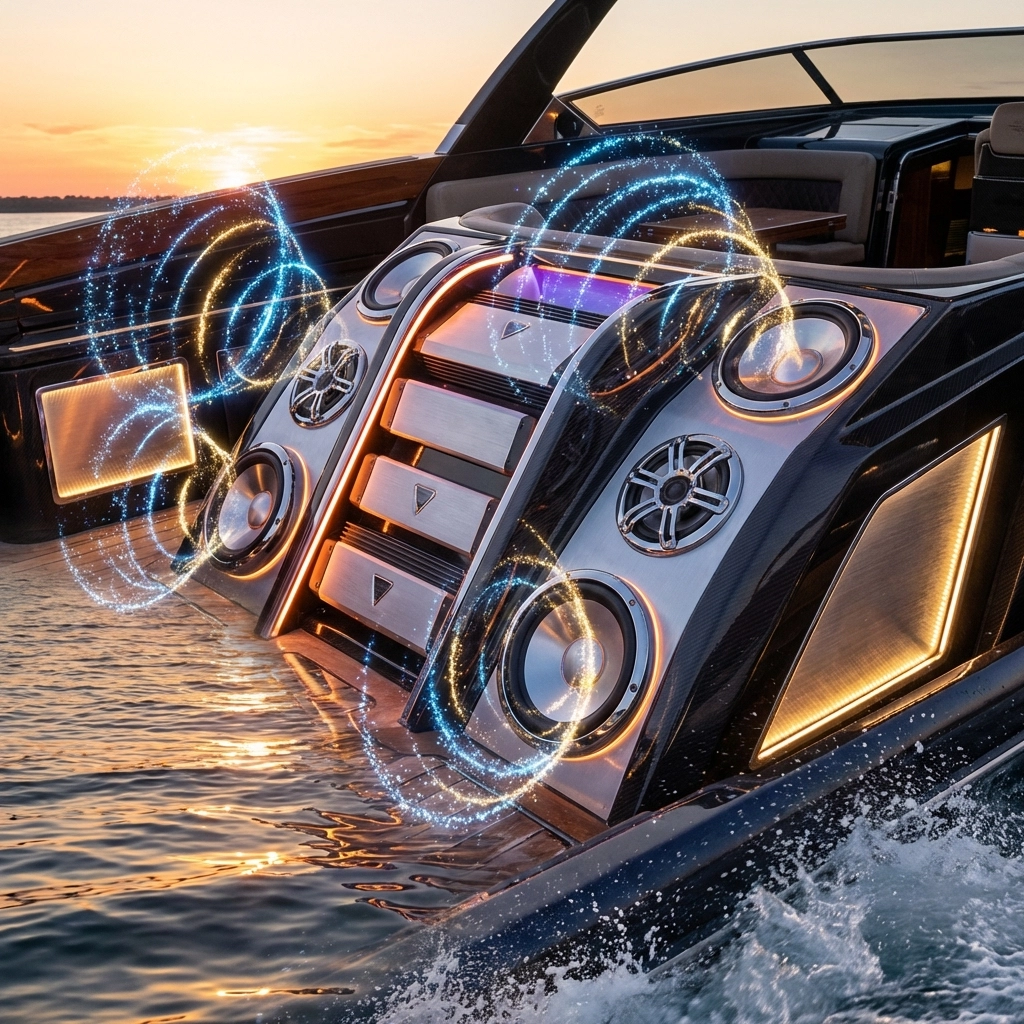
DIY Customs Store serves boaters nationwide with marine audio components from trusted brands. Free shipping on orders over $200 expedites delivery across all 50 states. Browse marine audio selections online at diycustoms.store for competitive pricing on premium marine entertainment systems.